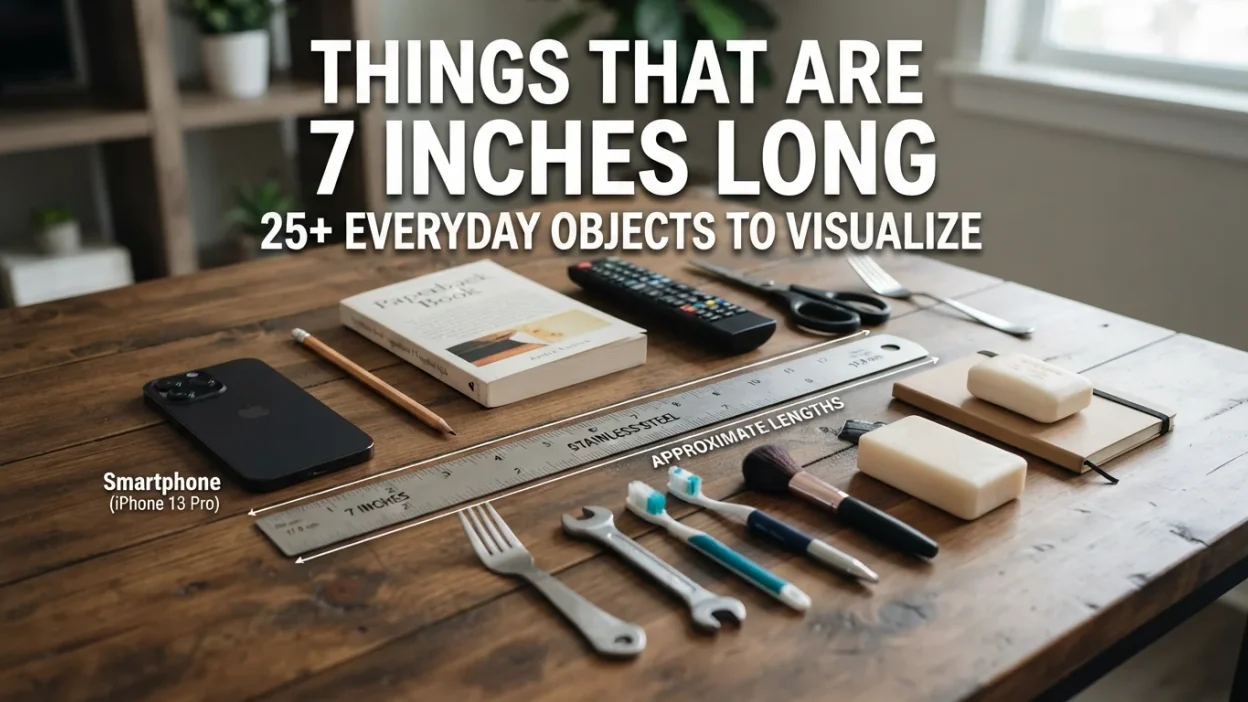
Have you ever tried to imagine how long 7 inches is without using a ruler? Measurements can be difficult to picture when you only see a number. Fortunately, familiar household items can help you understand this length in a practical way.
Seven inches equals 17.78 centimeters (cm) or 177.8 millimeters (mm). It is slightly more than half a foot and can be compared with objects such as certain toothbrushes, small notebooks, compact tools, and kitchen utensils.
Keep in mind that these comparisons are estimates rather than guaranteed measurements. Products differ in size, shape, and design, so an object that looks close to 7 inches may be slightly shorter or longer.
In this guide, you will discover more than 25 everyday objects that can help you visualize 7 inches, learn simple measuring tricks, and understand how this length compares with other common measurements.
How Long Is 7 Inches?
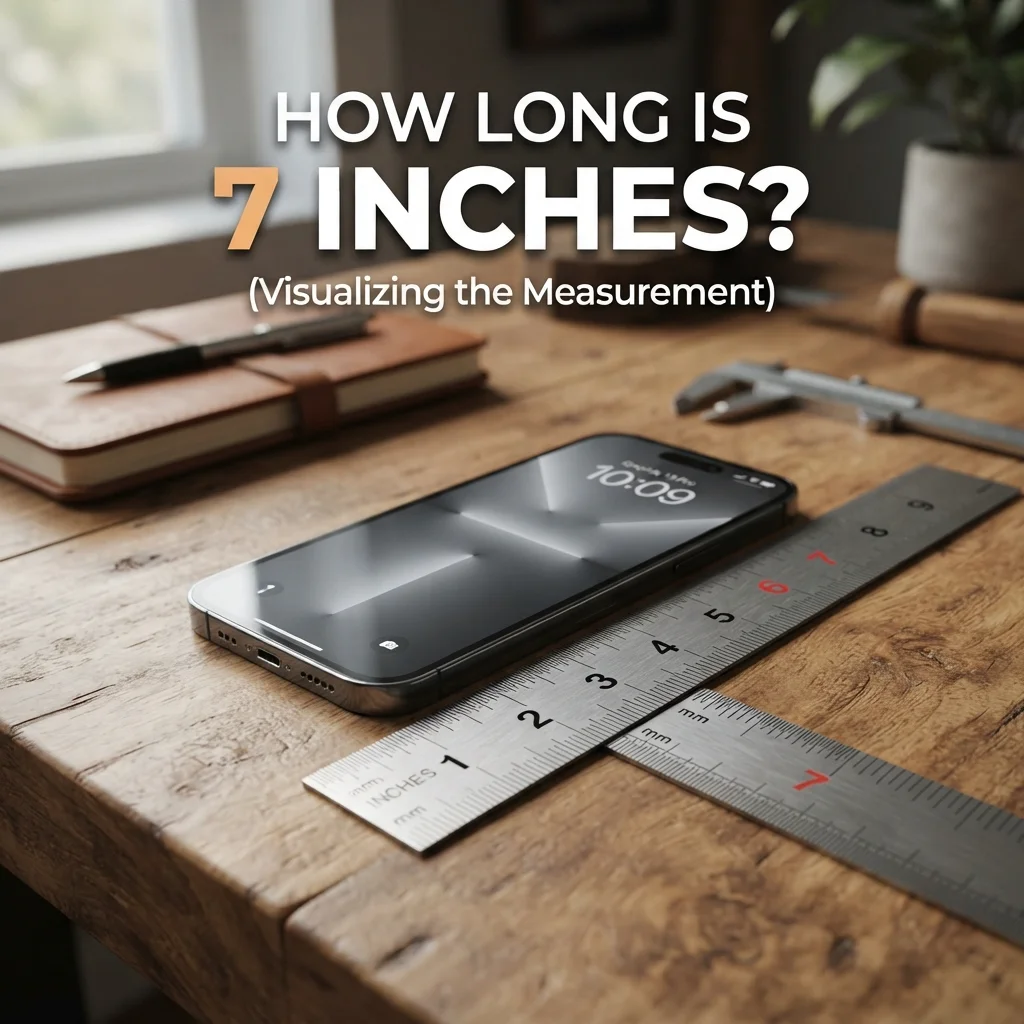
Seven inches measures exactly 17.78 centimeters. In everyday terms, it is a little longer than half of a standard 12-inch ruler.
Here is a quick conversion chart for reference.
| Measurement Unit | Equivalent |
|---|---|
| Inches | 7 inches |
| Centimeters | 17.78 cm |
| Millimeters | 177.8 mm |
| Feet | 0.5833 ft |
| Meters | 0.1778 m |
To convert inches into centimeters, multiply the number of inches by 2.54.
Calculation: 7 × 2.54 = 17.78 cm.
This conversion is exact. However, the everyday objects mentioned in this article are approximate comparisons unless their dimensions have been measured or specified by the manufacturer.
What Does 7 Inches Look Like?
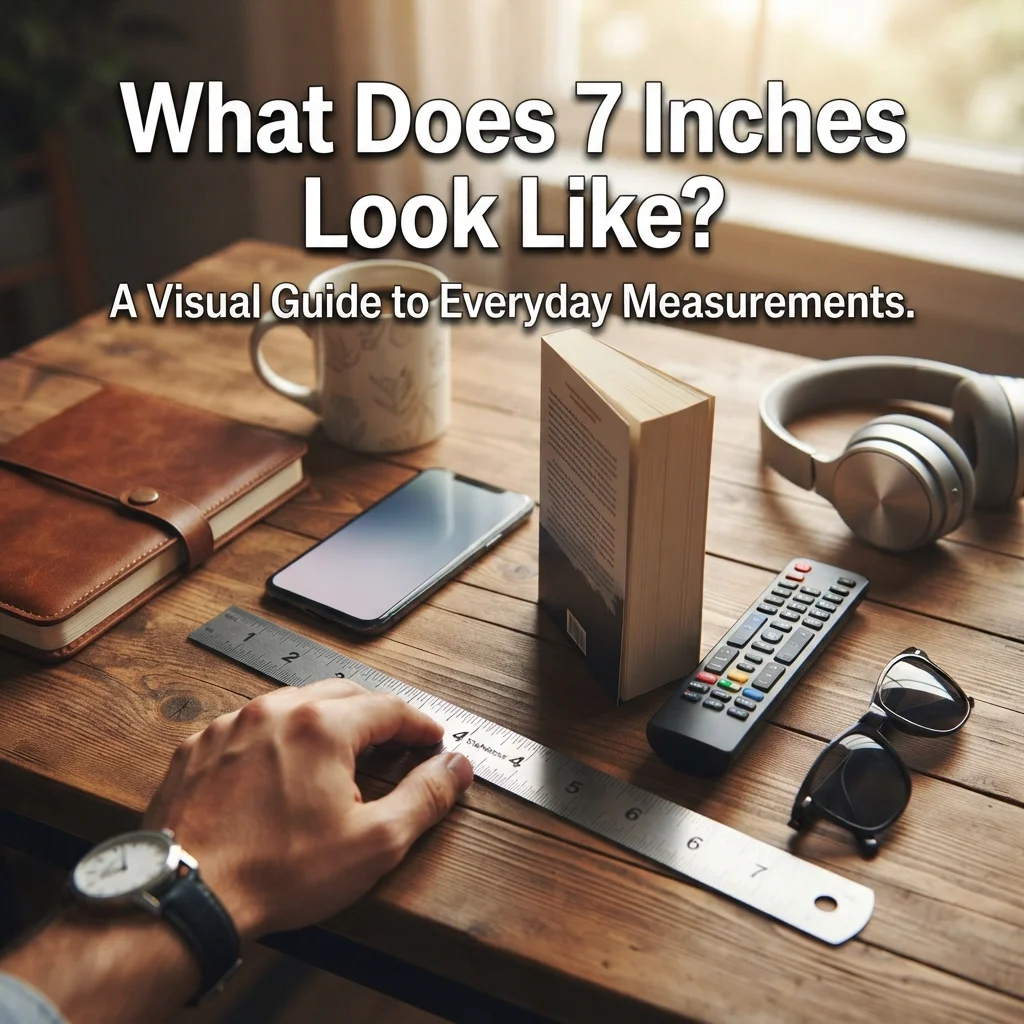
Imagine a line that measures just under 18 centimeters from one end to the other. That is approximately how long 7 inches looks in real life.
You can visualize it by looking at a compact household item, comparing it with a ruler, or placing two standard bank cards end to end. Two typical payment cards measure approximately 6.75 inches combined along their long edges, making them a useful reference.
Seven inches is also one inch longer than 6 inches and one inch shorter than 8 inches. These comparisons make it easier to estimate the measurement even when a ruler is not available.
25+ Things That Are 7 Inches Long
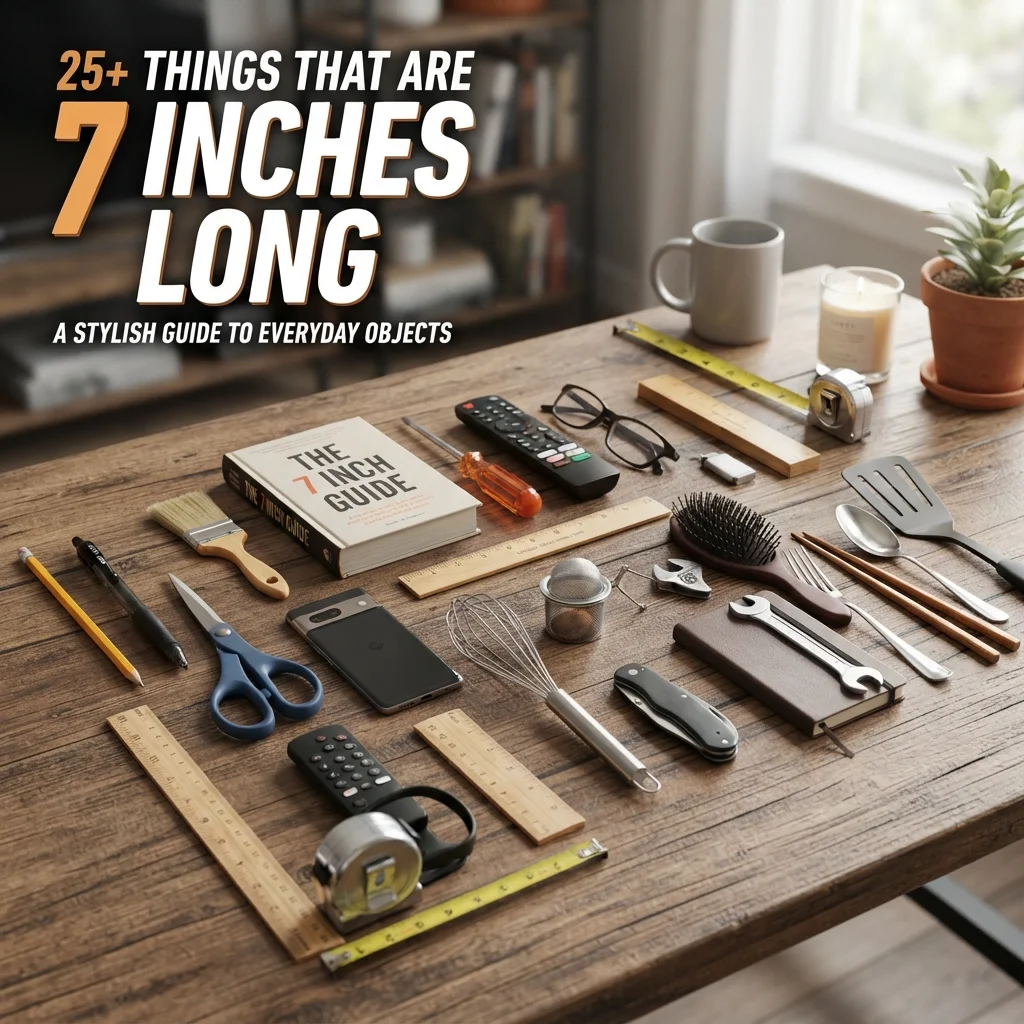
Many common objects can help you picture a length of 7 inches. The following examples include stationery, household accessories, kitchen tools, and other familiar items.
The measurements are approximate unless otherwise stated. Check the dimensions of your particular item whenever precision matters.
1. A 7-Inch Ruler
A ruler marked at 7 inches provides the most straightforward reference. Measure from the zero mark to the 7-inch mark, and you have an exact seven-inch length.
Not every ruler is seven inches long, so check its markings before using it for comparison.
2. A Pencil
Some pencils may measure close to 7 inches, particularly certain shorter pencils or pencils that have been sharpened repeatedly.
Pencil lengths vary by type and manufacturer. A brand-new standard pencil may be longer, so use this example for visualization rather than as an exact measurement.
3. A Toothbrush
Certain adult toothbrushes measure approximately 7 inches from the bottom of the handle to the tip of the brush head.
Travel toothbrushes and children’s toothbrushes can be shorter. Check the total length rather than measuring only the handle.
4. A Small Comb
A compact styling comb can be close to 7 inches long. Its straight shape makes it easy to compare against a ruler or measuring tape.
Pocket combs vary considerably, so this is a useful example only when the particular comb is near the target length.
5. A Compact Remote Control
Some small television, projector, or electronic-device remotes may measure around 7 inches long.
Larger remotes can exceed this measurement, while slim travel remotes may be considerably shorter. Measure from one end of the casing to the other for a fair comparison.
6. A Dinner Knife
Some compact dinner knives have a total length near 7 inches.
Remember to include both the blade and the handle when measuring the whole utensil. Blade length alone does not represent the overall length of the knife.
7. A Butter Knife
A small butter knife can be another useful reference if its full length is approximately 7 inches.
Different designs have different dimensions. Some butter knives are shorter, while larger table knives can be longer.
8. A Small Notebook
Certain pocket notebooks have a side measuring close to 7 inches.
The height and width depend on the notebook format. Measure the edge you want to compare because a notebook can be seven inches tall without being seven inches wide.
9. A Paperback Book
Some compact paperback books measure around 7 inches in height.
However, paperback dimensions vary according to the publisher, trim size, and book format. A book that is seven inches tall may have a much narrower width.
10. A Paintbrush
Some craft and art paintbrushes are approximately 7 inches long when measured from the end of the handle to the tip of the bristles.
Long-handled brushes may be substantially longer. For an accurate comparison, include the complete brush rather than just the wooden or plastic handle.
11. A Small Flashlight
A compact handheld flashlight may be close to 7 inches long.
This depends on the battery design, housing, and intended use. Larger outdoor flashlights are often much longer than compact household models.
12. A Screwdriver
Some screwdrivers have an overall length of around 7 inches, including the shaft and handle.
Tool measurements are not standardized around one total length. Always check whether a listed dimension refers to the shaft alone or the complete tool.
13. A Pair of Scissors
Certain small household scissors can be approximately 7 inches long.
To measure them, keep the scissors closed and measure from the blade tips to the farthest point of the handles. Craft scissors and heavy-duty kitchen scissors may have different dimensions.
14. A Compact Hairbrush
Some travel-sized hairbrushes can measure close to 7 inches in length.
Full-sized paddle brushes are often longer or wider. A compact brush is therefore a better candidate for this comparison than a large styling brush.
15. A Small Kitchen Spatula

A compact spatula may measure around 7 inches from the end of its handle to the edge of its head.
Many cooking spatulas are considerably longer, especially those designed for grilling or reaching into deep cookware. Choose a small model if you want to use this comparison.
16. A Serving Spoon
Some small serving spoons have a total length near 7 inches.
The shape of the bowl and the length of the handle affect the overall dimension. Measure the entire spoon to determine whether it is a suitable match.
17. A Small Water Bottle
A compact water bottle may stand close to 7 inches tall.
Bottle height depends on its capacity, shape, and cap design. A narrow bottle and a wide bottle can hold similar amounts of liquid while having different dimensions.
18. A Short Decorative Candle
Certain short decorative candles may be approximately 7 inches tall.
Measure from the base to the top of the candle. Candle sizes differ by style, so do not assume that every taper or decorative candle has the same height.
19. A Small Picture Frame
One edge of a compact picture frame may measure close to 7 inches.
For example, its height might be seven inches while its width is smaller. Remember that the outside frame dimensions differ from the size of the photograph it holds.
20. A Small Electronic Accessory
Some compact electronic accessories or their packaging may have a dimension near 7 inches.
This is not a standardized product size. Packaging can also be longer than the actual device, so measure the item itself when comparing physical dimensions.
21. A Wooden Craft Stick
Certain wooden craft sticks and decorative dowels are sold in lengths around 7 inches.
Their straight edges make them convenient for rough comparisons. However, craft sticks come in several standard and custom sizes, so check the package specifications.
22. Compact Kitchen Tongs
Small kitchen tongs may measure approximately 7 inches when closed.
Long barbecue tongs are generally designed for greater reach and are not suitable comparisons. Check the total closed length rather than the distance between the gripping ends.
23. A Styling Comb
A longer styling comb may be close to 7 inches long, although its size depends on its intended use.
This example is similar to a small comb, but it is worth distinguishing a long salon-style comb from a shorter pocket comb when comparing actual products.
24. A Decorative Craft Stick
Decorative wooden or plastic sticks used in crafts may be available in lengths close to 7 inches.
These items can be useful for school projects, small decorations, and DIY work. Their dimensions depend on the material and manufacturer.
25. A Compact Hand Tool
Some small hand tools, including certain measuring accessories and utility tools, may measure around 7 inches overall.
Because tools come in many shapes, this comparison works only when the particular model has a similar total length.
26. A Small Tablet
A tablet advertised as having a 7-inch screen is a useful way to think about this measurement, but there is an important distinction.
Screen size usually refers to the diagonal distance between opposite corners of the display. It does not mean the tablet is seven inches wide or seven inches tall.
27. A Small Hair Accessory or Styling Tool
Certain compact hair accessories and styling tools may measure close to 7 inches along their longest edge.
This depends on the type of accessory. A straight styling tool, for instance, can be much longer than a small clip or travel accessory, so check the actual dimensions.
Quick Comparison: Objects That May Be Close to 7 Inches
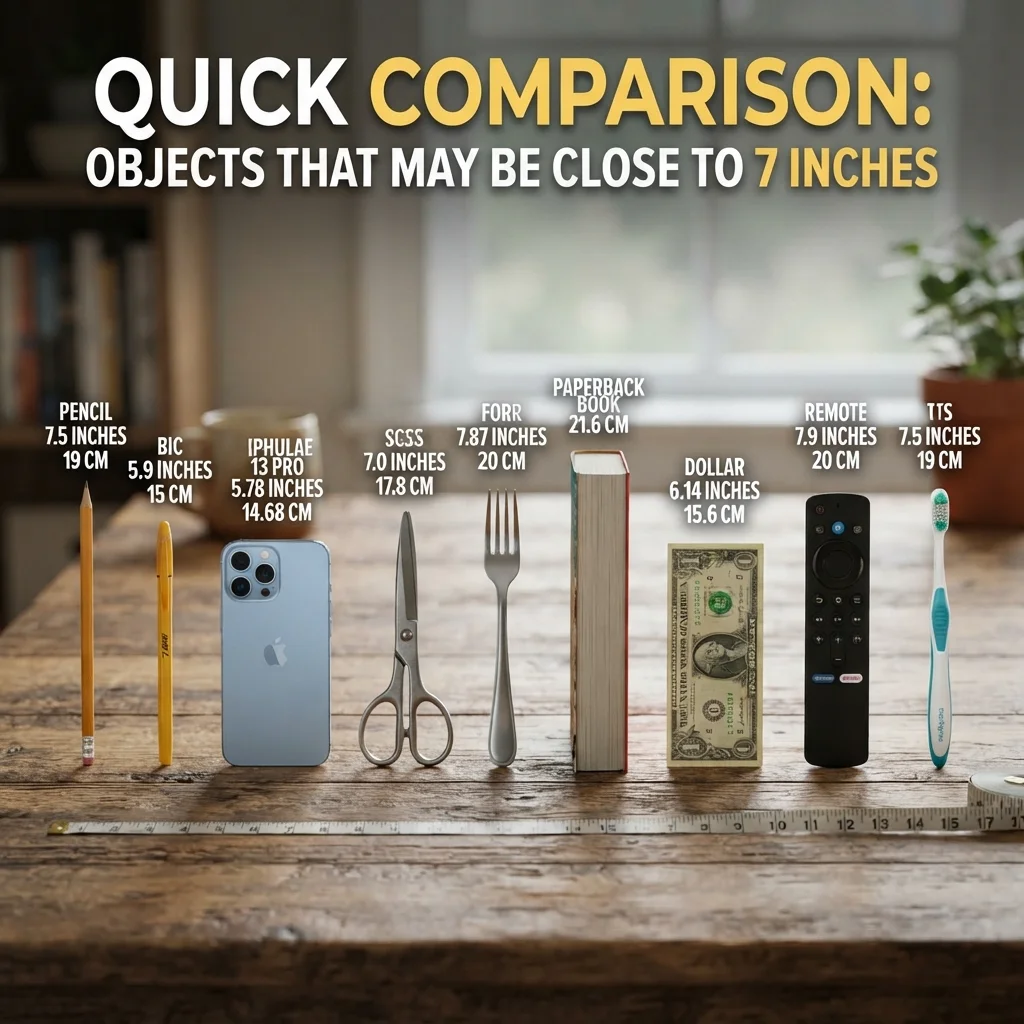
The table below summarizes some of the more practical comparisons.
| Everyday Object | How It Helps |
|---|---|
| 7-inch ruler | Exact reference when properly marked |
| Toothbrush | Familiar household comparison |
| Small comb | Straight, easy-to-compare shape |
| Compact remote | Convenient electronic-device reference |
| Butter knife | Useful if the total length is similar |
| Small notebook | Compare one edge at a time |
| Paintbrush | Measure handle and brush together |
| Small flashlight | Compare the complete casing |
| Wooden craft stick | Straight reference for a rough estimate |
| Compact hairbrush | Useful for visualizing a short tool |
| Small water bottle | Helps visualize height |
| Small tablet screen | Useful only when accounting for diagonal size |
The ruler is the most reliable option in this list. The remaining objects should be treated as approximate examples, not universal seven-inch standards.
7 Inches Compared With 6 Inches
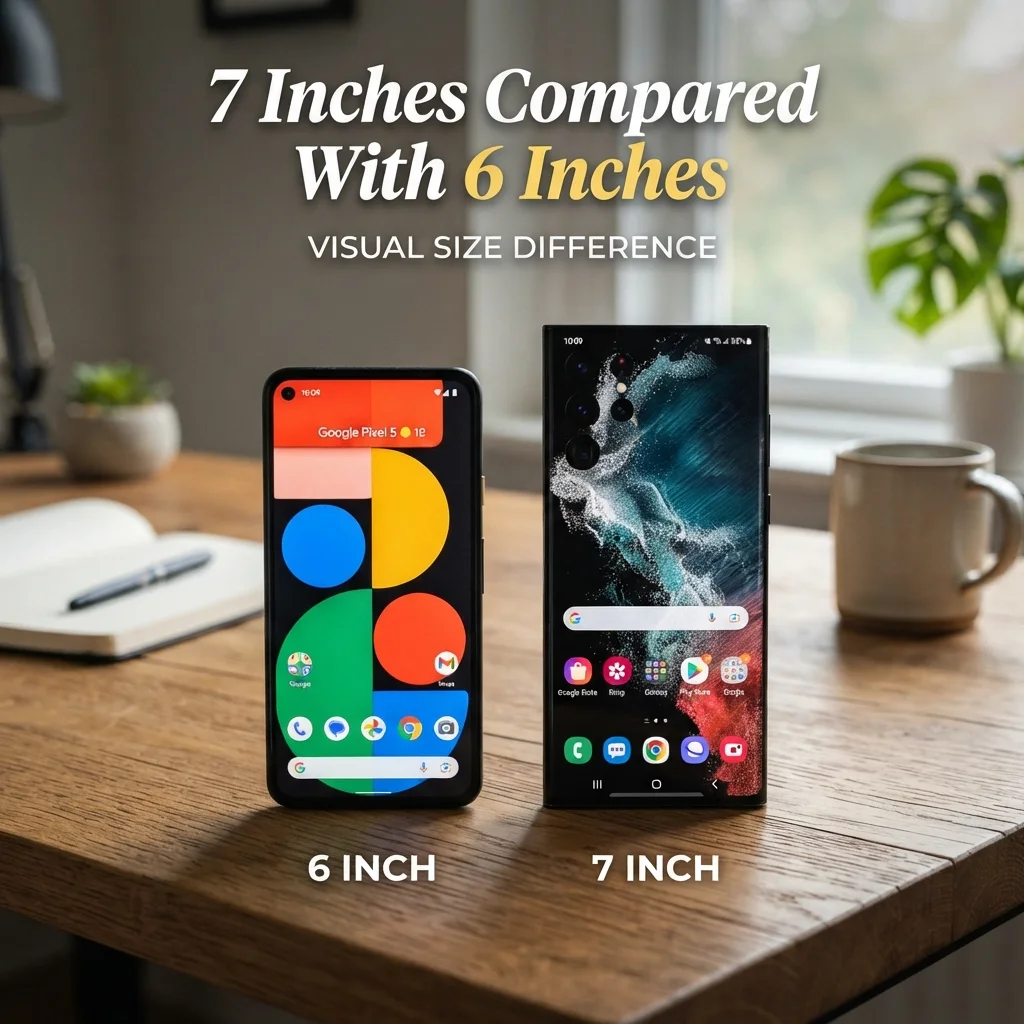
Seven inches is exactly one inch longer than 6 inches.
| Length | Centimeters |
|---|---|
| 6 inches | 15.24 cm |
| 7 inches | 17.78 cm |
| Difference | 2.54 cm |
The difference may appear small, but it can matter when measuring a shelf, fitting a component, or choosing a product.
7 Inches Compared With 8 Inches
Seven inches is one inch shorter than 8 inches.
Eight inches equals 20.32 centimeters, while seven inches equals 17.78 centimeters. The difference is 2.54 centimeters.
If you can picture an eight-inch ruler segment, imagine removing one inch from its length to visualize seven inches.
7 Inches Compared With 1 Foot
One foot contains 12 inches. Therefore, seven inches is five inches shorter than a foot.
As a fraction of a foot, seven inches is 7/12, or approximately 0.5833 feet. This means it is a little more than half a foot.
This comparison is particularly helpful if you are familiar with a standard 12-inch ruler.
How to Estimate 7 Inches Without a Ruler
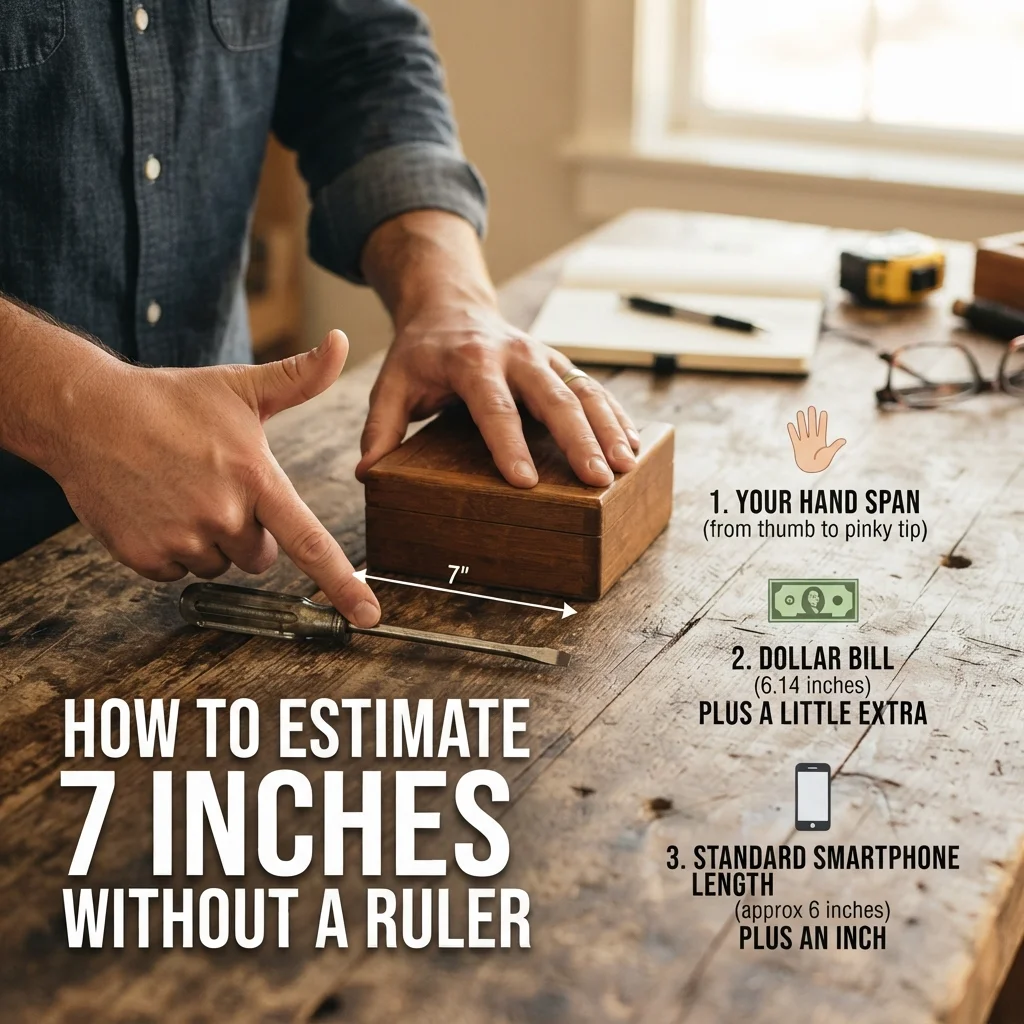
You can use familiar items to create a rough reference when you do not have measuring equipment nearby.
Use Two Bank Cards
A typical payment card measures approximately 3.375 inches along its longer edge.
Place two cards end to end, with their long edges aligned. Their combined length will be around 6.75 inches, which is just a quarter of an inch shorter than seven inches.
This method is useful for a quick estimate, but card dimensions and alignment can affect the result.
Use Your Hand
Your hand can provide a personal reference for estimating short distances. However, hand proportions differ from person to person.
You might compare the distance across your palm or along part of your hand with a known measurement. For better accuracy, check that reference against a ruler at least once.
Use a 12-Inch Ruler
If you have access to a standard ruler, locate the zero mark and count to seven inches.
Avoid starting at the physical edge if the ruler has a small blank margin before the zero mark. Starting from the correct mark prevents measurement errors.
Mark the Length on Paper
Place a ruler on a sheet of paper and draw a line from zero to seven inches. You can then use that line as a temporary reference for objects that are safe to measure.
This is helpful for comparing several small items without repeatedly converting inches into centimeters.
Is 7 Inches Considered Long or Short?
Whether seven inches seems long or short depends on the object and its purpose.
- For stationery: Seven inches may be a practical length for certain compact supplies.
- For kitchen tools: It can be a convenient size for some small utensils.
- For books: It may describe the height of a compact paperback or notebook.
- For furniture: Seven inches is relatively short compared with most major furniture dimensions.
- For electronic screens: Seven inches may describe a diagonal screen measurement rather than the device’s physical length.
The measurement itself never changes. Only the context determines whether it feels long, short, large, or small.
Common Mistakes When Comparing 7 Inches
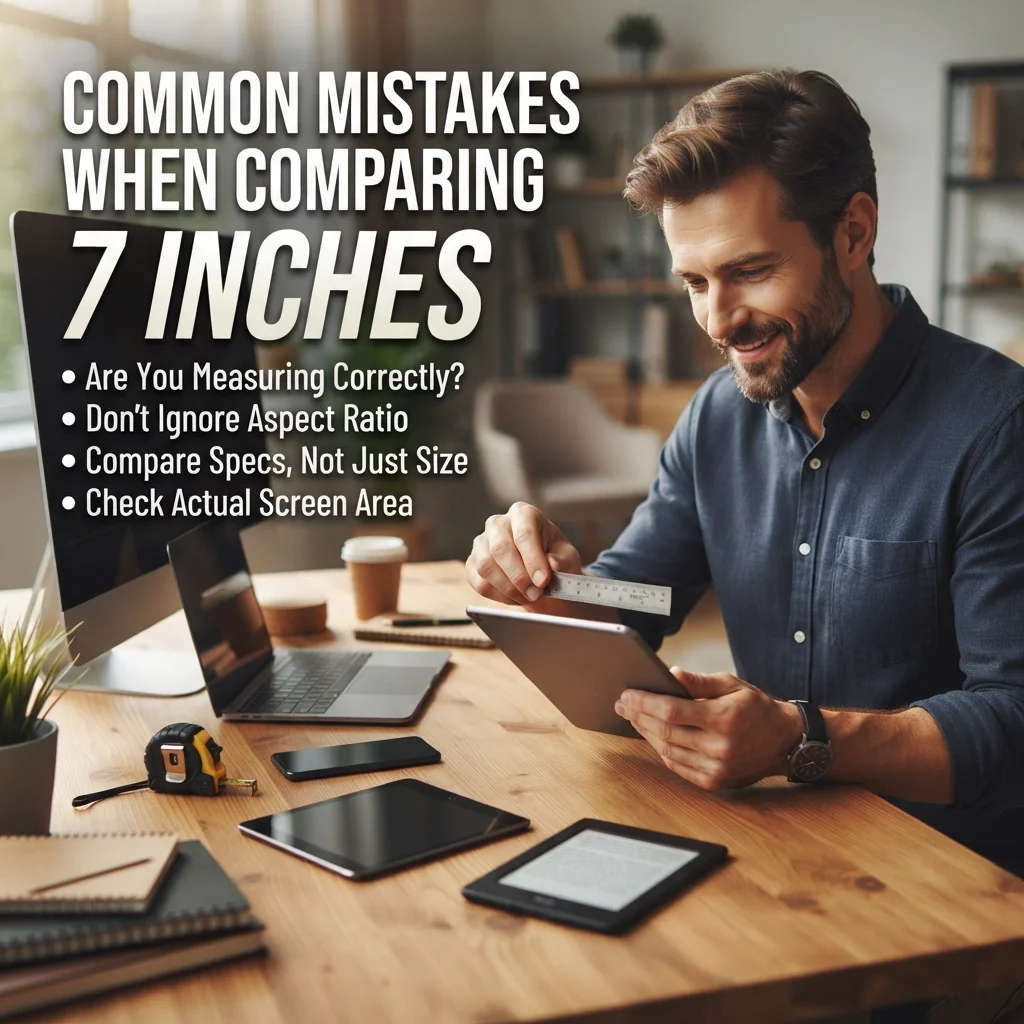
Confusing Diagonal Size With Length
A seven-inch screen does not necessarily have a seven-inch width. Screen measurements commonly describe the diagonal distance across the display.
Assuming Every Similar Object Is the Same Size
Two toothbrushes, books, or kitchen tools may look similar but have different dimensions. Use them as visual references only unless you measure them.
Mixing Inches and Centimeters
Seven inches equals 17.78 centimeters, not seven centimeters. Always check the unit shown on a measuring tool or product specification.
Measuring Only One Part of an Object
A screwdriver shaft may be seven inches long without its handle, or the full tool may measure seven inches overall. Make sure you know which dimension is being described.
Ignoring the Starting Point
Accurate measurement begins at zero. If you start at the edge of a ruler instead of its zero mark, the result may be incorrect.
Frequently Asked Questions
How many centimeters are in 7 inches?
Seven inches equals exactly 17.78 centimeters. Multiply seven by 2.54 to convert inches into centimeters.
How many millimeters are in 7 inches?
Seven inches equals 177.8 millimeters. One inch is equal to 25.4 millimeters.
How many feet is 7 inches?
Seven inches is approximately 0.5833 feet. Divide seven by 12 to convert inches into feet.
Is 7 inches longer than half a foot?
Yes. Half a foot is six inches, so seven inches is exactly one inch longer.
Is 7 inches close to 18 centimeters?
Yes. Seven inches equals 17.78 centimeters, which rounds to approximately 18 centimeters.
What household objects are about 7 inches long?
Some toothbrushes, compact combs, remote controls, small flashlights, paintbrushes, and kitchen utensils may be close to seven inches. Their actual dimensions vary by product.
How can I measure 7 inches accurately?
Use a ruler or measuring tape. Start at zero and mark the seven-inch point. For precise work, avoid relying on estimates based on household objects.
Does a 7-inch tablet measure 7 inches wide?
Not necessarily. A tablet’s advertised screen size generally refers to the diagonal measurement of the display. The actual width and height depend on its aspect ratio and bezel design.
Final Thoughts
Understanding things that are 7 inches long becomes easier when you compare the measurement with familiar everyday objects. Seven inches equals 17.78 centimeters, making it a little more than half a foot.
A ruler provides an exact reference, while a toothbrush, compact comb, small notebook, paintbrush, or similar household item can help you visualize the length. Remember that these objects are only approximate comparisons unless their dimensions have been verified.
If you need the measurement for a DIY project, product purchase, or fitting requirement, use a ruler or measuring tape rather than relying on appearance. This simple step helps you distinguish a rough estimate from an accurate seven-inch measurement.

Mr. Abdullah is a content writer at Mezvoro who creates helpful, engaging and easy-to-read content for online readers. His work focuses on sharing fresh ideas, useful guides and creative inspiration across a range of topics.