
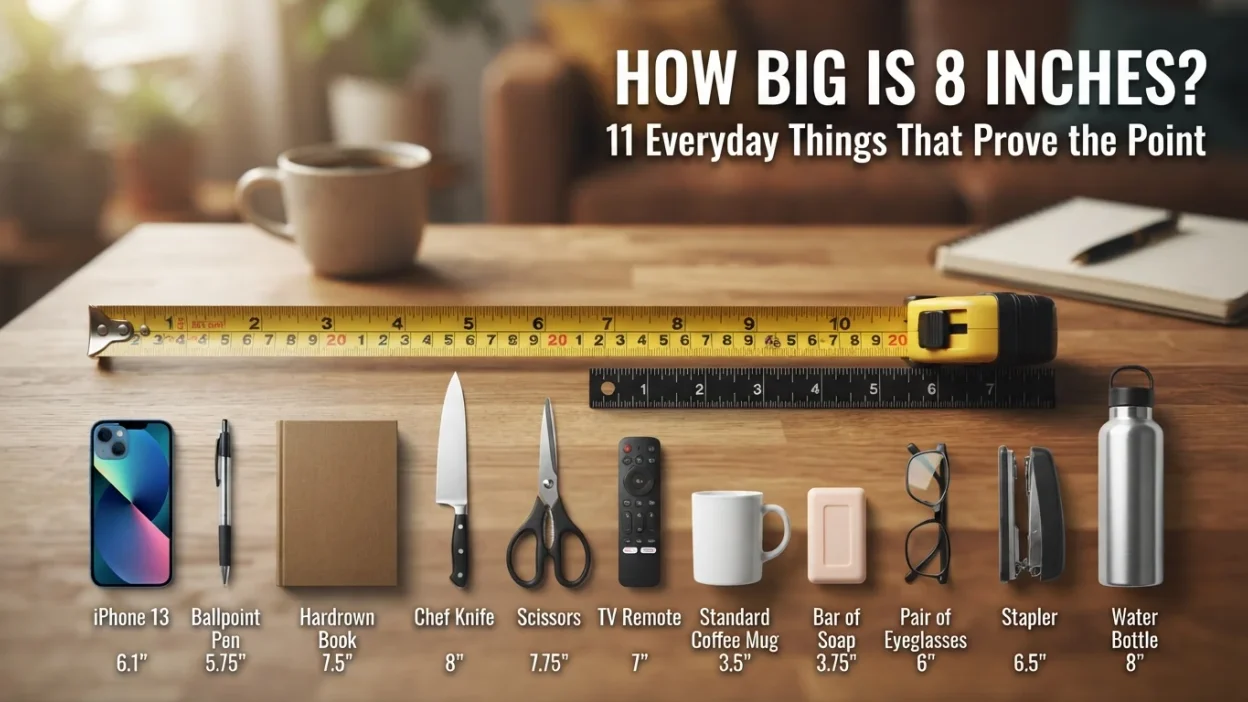
Eight inches is one of those measurements that feels familiar but is surprisingly hard to picture accurately. It’s a round number, easy to say, and common enough that most people assume they know it. But ask someone to point to something exactly that long without a ruler, and most people will hesitate—or guess wrong by an inch or more.
The problem is that this length sits in a crowded middle zone. It’s shorter than a standard ruler but longer than most handheld objects. It’s roughly the length of a dollar bill plus a bit, the height of a soda can stacked on a phone, or the width of a standard piece of paper. Because so many things land near this size, the mental image blurs.
This guide solves that problem. You’ll get the exact conversions, see where this measurement sits among common sizes, and work through eleven everyday objects that land close to this length. By the end, you’ll have at least three reliable mental references you can use anywhere.
Eight inches equals 20.32 centimeters, 203.2 millimeters, or roughly 0.667 feet.
That’s the number to lock in. Now let’s see how it breaks down across every unit people actually search for.
Every Unit 8 Inches Converts To
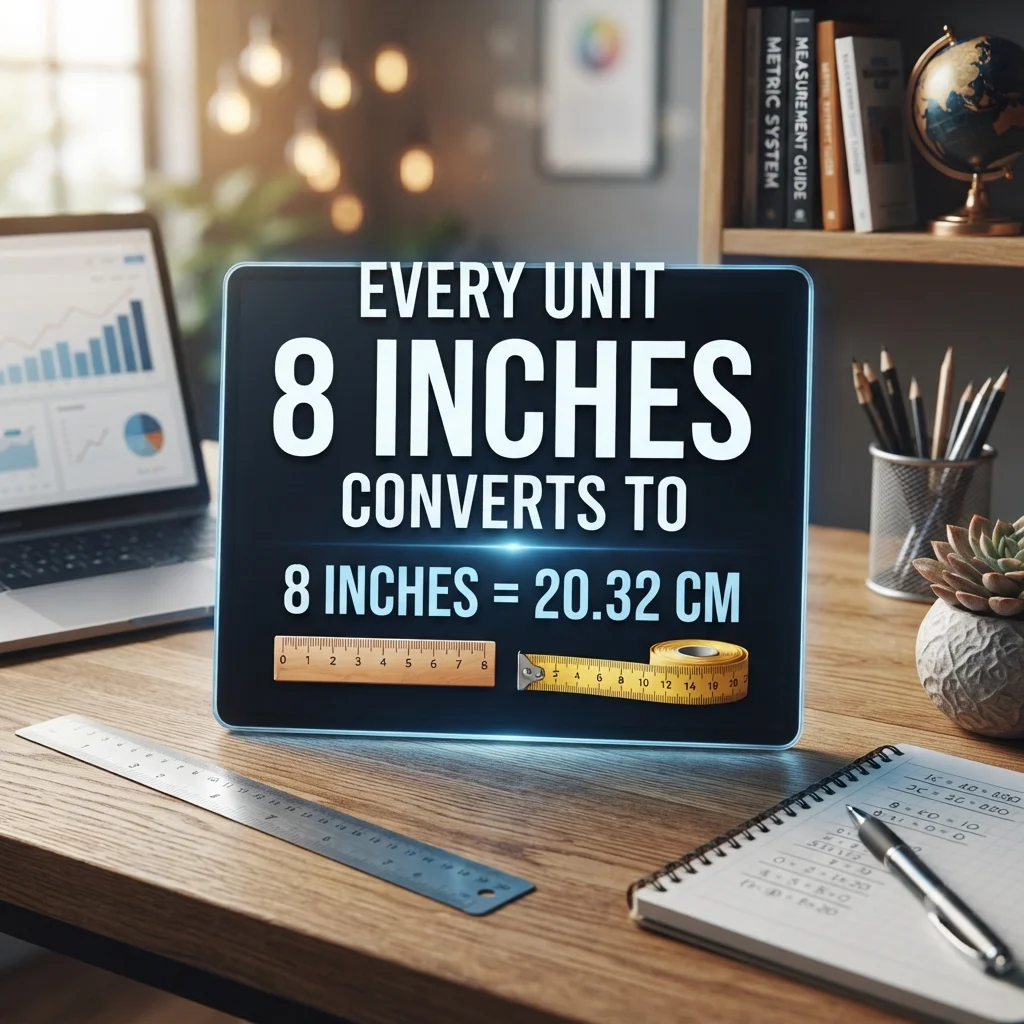
Before comparing this length to everyday objects, here’s the full breakdown across the units people search for most.
| Unit | Value |
|---|---|
| Inches | 8 |
| Feet | 0.667 |
| Yards | 0.222 |
| Centimeters | 20.32 |
| Millimeters | 203.2 |
| Meters | 0.203 |
The math here is clean because 8 is a simple starting point. To get feet, divide by 12—so 8 ÷ 12 equals 0.6667, which rounds to 0.667. For yards, divide by 36, giving you 0.222. In the metric system, multiply by 2.54 to get centimeters, which turns this length into exactly 20.32 cm. Multiply by 25.4 for millimeters and you get 203.2 mm. Divide the centimeter figure by 100 for meters, landing at 0.203 meters.
The cleanest takeaway is the centimeter figure. This length is exactly 20.32 centimeters—no rounding, no messy decimals beyond the second place. If you ever need to convert it on the fly, 20.32 cm is the figure worth memorizing.
Where This Measurement Sits on the Scale

This is a medium measurement. It’s smaller than a standard ruler (12 inches), smaller than a sheet of paper (11 inches on the long side), and smaller than most tablets (8 to 13 inches diagonally). But it’s larger than a credit card (3.37 inches), larger than a dollar bill (6.14 inches), and larger than most smartphones (5.5 to 6.5 inches).
Where it gets interesting is in product design. This size is a common dimension for tablets, frying pans, cake pans, and small cutting boards. It’s also the standard length for many kitchen knives, the height of a standard paperback book, and the width of a standard piece of printer paper. Manufacturers gravitate toward this size because it’s large enough to be useful but small enough to handle comfortably.
In the context of screen sizes, this is the standard for compact tablets. The iPad Mini has an 8.3-inch screen, and many Android tablets land right at this size diagonally. It’s also the size of many e-readers and handheld gaming devices.
11 Things That Measure Around 8 Inches
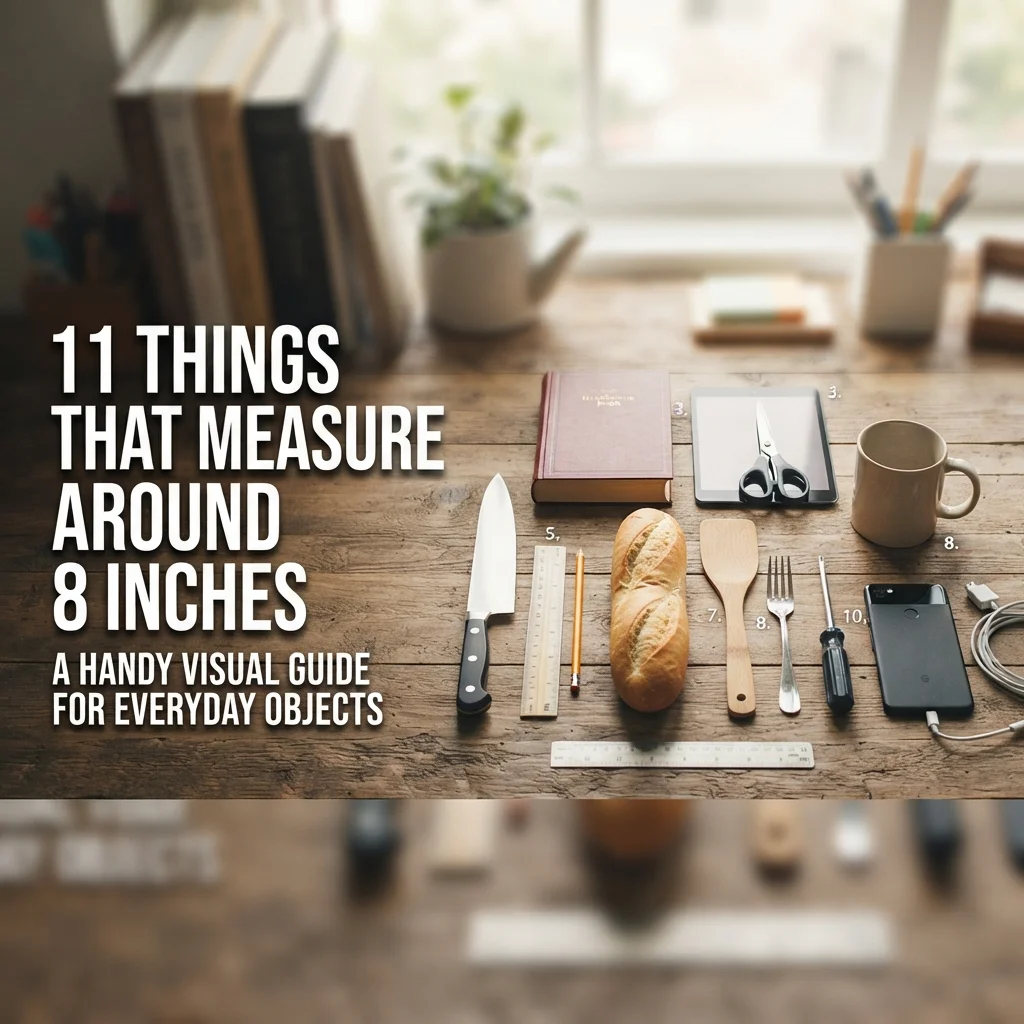
Here are eleven objects that land close to this length, ranging from nearly exact matches to useful approximations.
A Standard Piece of Printer Paper (Width)
A standard US Letter sheet measures 8.5 inches wide and 11 inches long. The width—8.5 inches—is the closest match to this measurement on a standard sheet of paper. The difference is just half an inch.
This is one of the most useful everyday references. If you have a piece of printer paper nearby, its short edge is nearly exactly the target length. Lay it flat and you have a reliable measuring tool without hunting for a ruler.
[IMAGE: a standard sheet of printer paper with a ruler showing its 8.5-inch width, with alt text “8 inches measured on printer paper width”]
A Standard Tablet Screen (Diagonal)
Many tablets have 8-inch screens measured diagonally. The iPad Mini has an 8.3-inch display, and several Amazon Fire tablets and Samsung Galaxy Tab models land right at this size. These devices are common and easy to picture.
The diagonal measurement is the key detail here. An 8-inch screen doesn’t mean the tablet is that tall—it means the distance from one corner of the display to the opposite corner matches this length. The tablet itself is usually taller and wider than that.
[IMAGE: a compact tablet with a ruler placed diagonally across the screen showing 8 inches, with alt text “8 inches diagonal tablet screen measurement”]
A Standard Frying Pan
A small frying pan typically measures 8 inches across the top. This is one of the most common pan sizes sold—large enough for eggs, small enough for a single serving of vegetables. An 8-inch pan is a kitchen staple in many homes.
The measurement refers to the diameter across the rim, not the cooking surface. The actual flat cooking area is usually about 6 to 7 inches across because the sides slope inward.
[IMAGE: an 8-inch frying pan with a ruler across the rim showing its diameter, with alt text “8 inches frying pan diameter”]
A Standard Cake Pan
A round cake pan measures 8 inches in diameter in one of the most common sizes. Square cake pans also come in 8×8 inch dimensions. These are standard sizes for brownies, small cakes, and cornbread.
If you have a baking pan in your kitchen, check the size. An 8-inch round or 8×8 square pan is a perfect reference for this measurement. It’s also a useful size for portioning recipes.
[IMAGE: an 8-inch round cake pan with a ruler across the top showing its diameter, with alt text “8 inches round cake pan diameter”]
A Standard Chef’s Knife (Blade)
A chef’s knife blade typically measures 8 inches long. This is the most common size for professional and home cooks alike. The blade length refers to the cutting edge, not the handle, which adds another 4 to 5 inches.
An 8-inch chef’s knife is the workhorse of most kitchens. It’s long enough to handle most cutting tasks but short enough to control precisely. If you have one in your knife block, its blade is your reference.
[IMAGE: an 8-inch chef’s knife with a ruler alongside the blade, with alt text “8 inches chef knife blade length”]
A Standard Smartphone (Height)
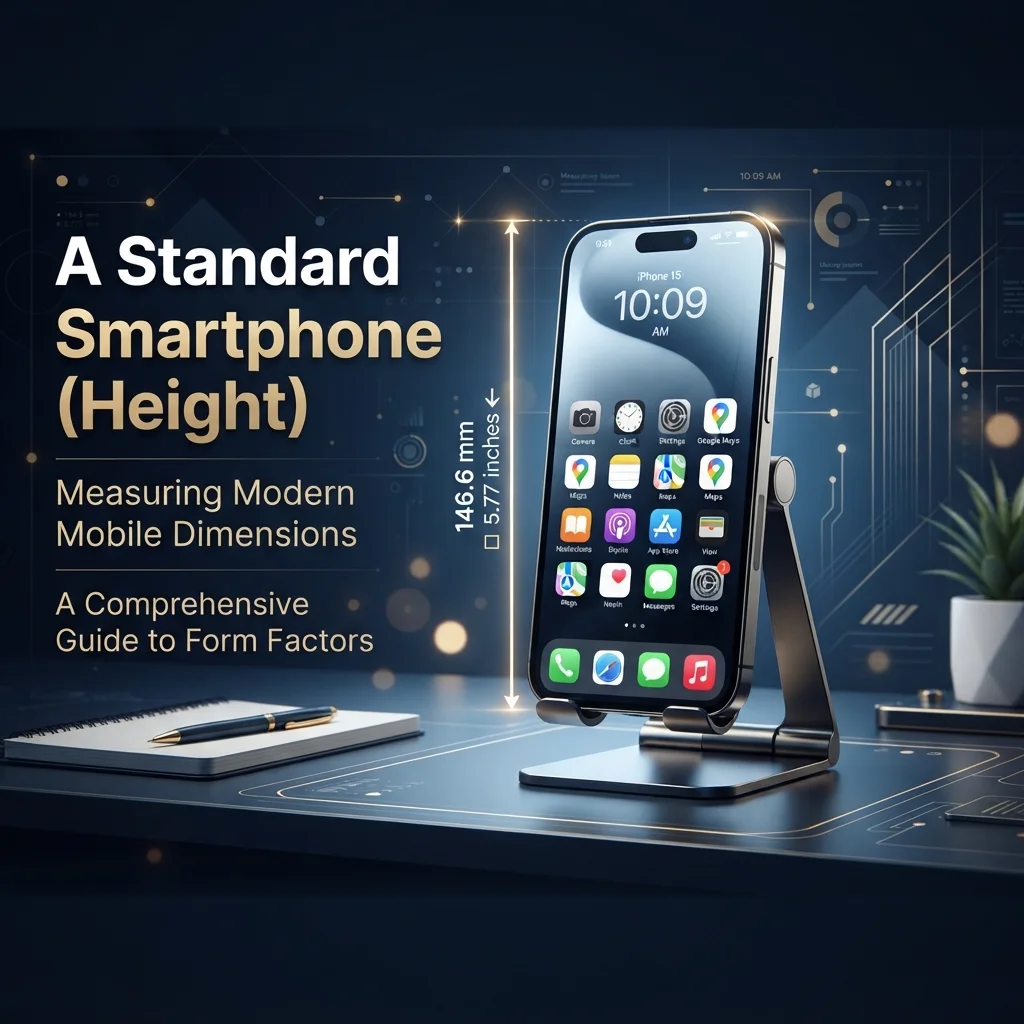
Most modern smartphones measure 5.5 to 6.5 inches tall. That’s shorter than the target by 1.5 to 2.5 inches. A large phone in a bulky case might reach 6.8 inches, still short.
The phone doesn’t work as a reference on its own. But a phone plus a small notepad or a stack of index cards can get you close. It’s not precise, but it’s workable in a pinch.
[IMAGE: a large smartphone next to a ruler showing it falls short of 8 inches, with alt text “8 inches comparison with smartphone height”]
A Standard Paperback Book
A mass-market paperback typically measures 4.25 inches wide and 6.87 inches tall. A trade paperback is larger, usually 5.5 inches wide and 8.5 inches tall. The trade paperback’s height is the closest match.
If you have a trade paperback on your shelf, its height is approximately 8.5 inches—just half an inch over the target. It’s a reasonable reference for casual estimation.
[IMAGE: a trade paperback book next to a ruler showing its height near 8 inches, with alt text “8 inches compared to paperback book height”]
A Standard Cutting Board
A small cutting board often measures 8 inches by 10 inches or 8 inches by 12 inches. The 8-inch width is a common size for prep boards that fit easily on a countertop.
Cutting board sizes vary widely, so this comparison depends on which board you have. A large board might be 12 inches or more, while a small prep board could be just 6 inches. The 8-inch size is a middle ground.
[IMAGE: a small cutting board with a ruler along its short edge showing 8 inches, with alt text “8 inches cutting board width”]
A Standard Envelope
A #10 business envelope measures 9.5 inches long and 4.125 inches tall. Neither dimension matches. A 6×9 inch booklet envelope is 9 inches long, still too long. A 5×7 inch envelope is too small.
The closest envelope match is a 6.5×8 inch photo envelope or a small manila envelope, which can measure 8 inches on the short side. These exist but aren’t the most common size in most homes.
[IMAGE: a small manila envelope next to a ruler showing its 8-inch dimension, with alt text “8 inches envelope measurement”]
A Standard TV Remote
TV remotes vary widely in size. A typical full-size remote measures 7 to 8 inches long. That’s right in the target range. A compact streaming remote—like an Apple TV remote—measures about 5 inches, which falls short.
The full-size cable or smart TV remote is your best bet. If you have one on your coffee table, its length is almost exactly right. It’s a natural reference point that most people have within arm’s reach.
[IMAGE: a standard TV remote next to a ruler showing its 8-inch length, with alt text “8 inches TV remote length”]
A Standard Dollar Bill (Length)
A U.S. dollar bill measures 6.14 inches long—that’s nearly 2 inches short. Two bills laid end to end reach 12.28 inches, which overshoots. But fold a bill in half and you get 3.07 inches, which isn’t useful either.
The dollar bill works better as a reference for 6 inches. For this measurement, reach for the printer paper or the chef’s knife instead.
[IMAGE: a U.S. dollar bill next to a ruler showing its 6.14-inch length, with alt text “8 inches comparison with dollar bill”]
The Screen Size Question People Actually Mean

When people search for this measurement, they’re often trying to figure out a screen size. An 8-inch tablet was a standard category for years, and many people still use compact tablets with that diagonal measurement. The real question is usually: “How big is an 8-inch screen in real terms?”
Screen sizes are measured diagonally, corner to corner, across the visible display area—not the device’s body. An 8-inch screen on a 4:3 aspect ratio tablet measures about 6.4 inches wide and 4.8 inches tall. On a widescreen 16:10 aspect ratio, the same 8-inch diagonal produces a wider, shorter display.
For context, an 8-inch screen is smaller than almost every full-size tablet sold today. The standard iPad has a 10.9-inch screen, and most Android tablets range from 10 to 12 inches. An 8-inch screen feels compact by comparison—easier to hold in one hand, but less immersive for video and multitasking.
If you’re shopping for a tablet case or screen protector, the diagonal measurement matters less than the device’s actual dimensions. Always check the height and width rather than relying on the screen size alone. For more on screen measurements, see our guide on [INTERNAL LINK: how TV sizes are measured diagonally].
Getting There Without a Tape Measure

If you don’t have a ruler nearby, here are a few practical ways to estimate this length using things you already have.
Use a piece of printer paper. A standard US Letter sheet is 8.5 inches wide. That’s just half an inch wider than the target—close enough for most casual purposes. If you have printer paper, you have a reliable reference.
Use your hand. The average adult hand span—from thumb tip to pinky tip—is about 8 to 9 inches for men and 7 to 8 inches for women. For many people, a full hand span is almost exactly right. Spread your fingers wide and measure across.
Use a chef’s knife. An 8-inch chef’s knife blade is exactly the target length. If you have one in your kitchen, its blade is your reference. Just be careful handling it.
Use a standard envelope. A small manila envelope or photo envelope often measures 8 inches on the short side. Check your stationery drawer—there’s likely something that fits.
Use a dollar bill plus a smartphone. A dollar bill is 6.14 inches long. Add a small phone’s width (about 2.5 inches) and you get roughly 8.6 inches. It’s imprecise, but workable.
8 Inches FAQs
How many centimeters is 8 inches?
Eight inches equals exactly 20.32 centimeters. The conversion is 8 × 2.54 = 20.32. This is one of the cleanest inch-to-centimeter conversions because the math lands on a two-decimal figure with no rounding.
How many millimeters is 8 inches?
Eight inches equals 203.2 millimeters. Since one inch equals 25.4 millimeters, you multiply 8 by 25.4 to get 203.2. This is a useful figure for precision work like woodworking or engineering.
How many feet is 8 inches?
Eight inches equals approximately 0.667 feet. To get this, divide 8 by 12. The result is 0.6667, which rounds to 0.667. This is two-thirds of a foot.
How many meters is 8 inches?
Eight inches equals 0.203 meters. The calculation involves converting to centimeters first (20.32 cm), then dividing by 100. The result is just over one-fifth of a meter.
Is 8 inches a common screen size?
Yes, this is a standard tablet screen size. The iPad Mini has an 8.3-inch display, and many Android tablets and e-readers land right at this size diagonally. It’s considered a compact tablet size today, as full-size tablets have grown to 10 inches and beyond.
What everyday object is exactly 8 inches?
A standard chef’s knife blade measures exactly this length. A round cake pan or frying pan with an 8-inch diameter is also an exact match. A piece of printer paper is 8.5 inches wide—close but not exact.
How can I visualize this without a ruler?
The easiest method is to use a piece of printer paper, which is 8.5 inches wide—just half an inch over. A chef’s knife blade is exactly the target. For a body reference, the average adult hand span is about this length.
Is this measurement big or small?
This is a medium measurement. It’s smaller than a ruler, a sheet of paper, and most tablets, but larger than a dollar bill, a credit card, and most smartphones. In product design, it’s a common size for kitchen tools, small pans, and compact tablets. For more measurement guides, check our article on How Big Is 5 Inches.
Where That Leaves You
Eight inches equals 20.32 centimeters, 203.2 millimeters, or roughly 0.667 feet. The centimeter figure is the cleanest conversion to remember because it lands on a precise two-decimal number with no rounding.
The strongest everyday comparison is a standard chef’s knife blade, which measures exactly this length. A piece of printer paper is 8.5 inches wide—close enough for casual estimation—and an 8-inch frying pan or cake pan is an exact match for the diameter. For a body reference, the average adult hand span is about this length.
For quick visualization, remember that this is two-thirds of a foot, just over half an inch wider than a sheet of printer paper, and the exact length of a standard chef’s knife blade. Keep one of those references in mind, and you’ll never second-guess this measurement again. For more measurement comparisons, see our guides on Druski Body Measurements and Lauren Boebert Measurements.

Mr. Abdullah is a content writer at Mezvoro who creates helpful, engaging and easy-to-read content for online readers. His work focuses on sharing fresh ideas, useful guides and creative inspiration across a range of topics.