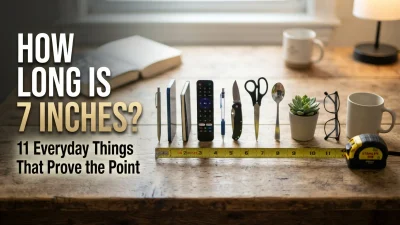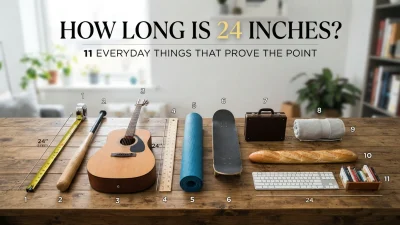
Six inches may seem like a small measurement, but it is useful in many everyday situations. You might need to estimate the length of a small object, check whether something will fit inside a drawer, or understand product dimensions before buying an item online.
The easiest way to picture this measurement is to compare it with familiar objects. A dollar bill, a compact smartphone, a small banana, and certain kitchen utensils can help you visualize a length close to six inches.
In this guide, you will discover 10 things that are approximately 6 inches long, learn how to convert six inches into other units, and find practical ways to estimate this measurement without a ruler.
Quick Answer: How Long Is 6 Inches?
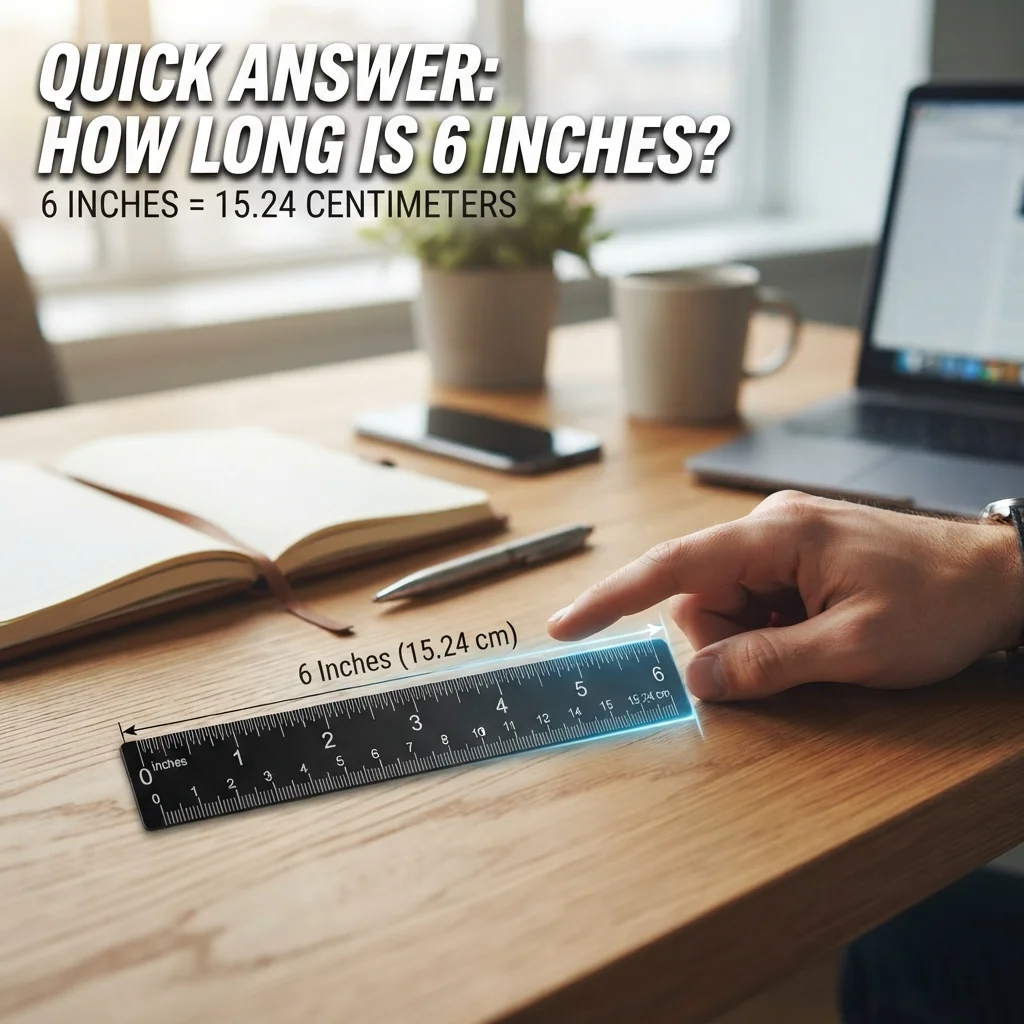
Six inches is equal to 15.24 centimeters, 152.4 millimeters, or half a foot. It is a relatively short length that you can visualize by imagining half of a standard 12-inch ruler.
Here are the basic conversions:
| Measurement Unit | Equivalent |
|---|---|
| Inches | 6 inches |
| Centimeters | 15.24 cm |
| Millimeters | 152.4 mm |
| Feet | 0.5 ft |
| Meters | 0.1524 m |
These conversions are useful when comparing product dimensions, working on craft projects, measuring small spaces, or following instructions that use different units.
What Does 6 Inches Look Like?
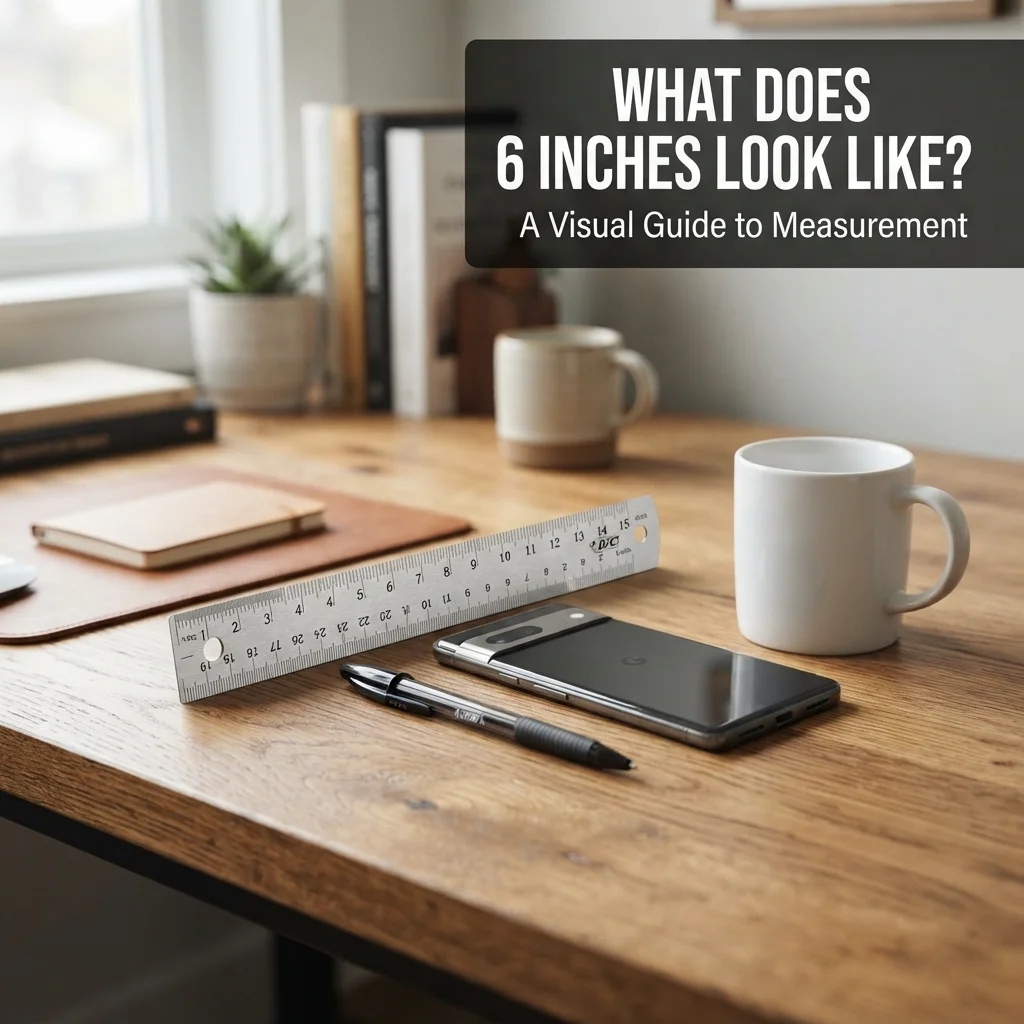
Imagine a straight line measuring 15.24 centimeters from one end to the other. That is the length of six inches.
If you do not have a ruler available, think about a United States dollar bill. It measures approximately 6.14 inches long, making it a convenient real-world reference.
You can also picture a compact household object, such as a small remote control or a shortened pencil. Depending on the specific item, its length may be close to six inches.
Remember that familiar objects are helpful for estimating measurements, but they are not substitutes for an actual measuring tool when precision matters.
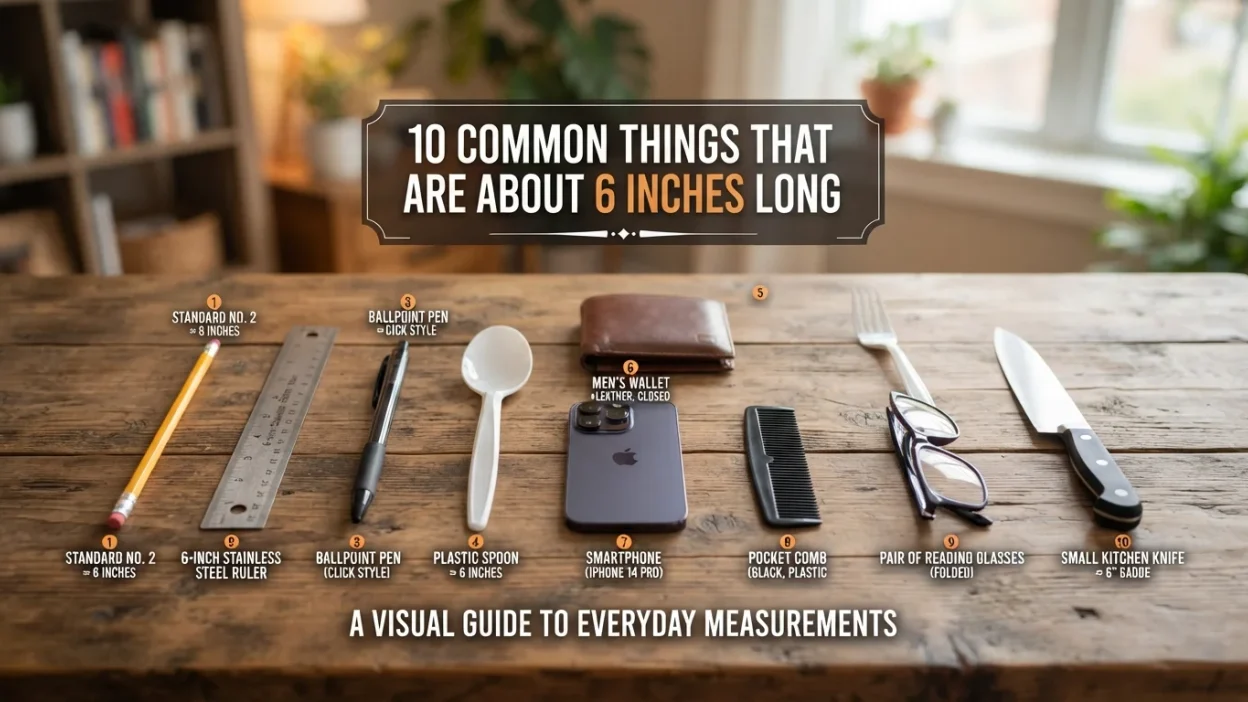
10 Common Things That Are About 6 Inches Long
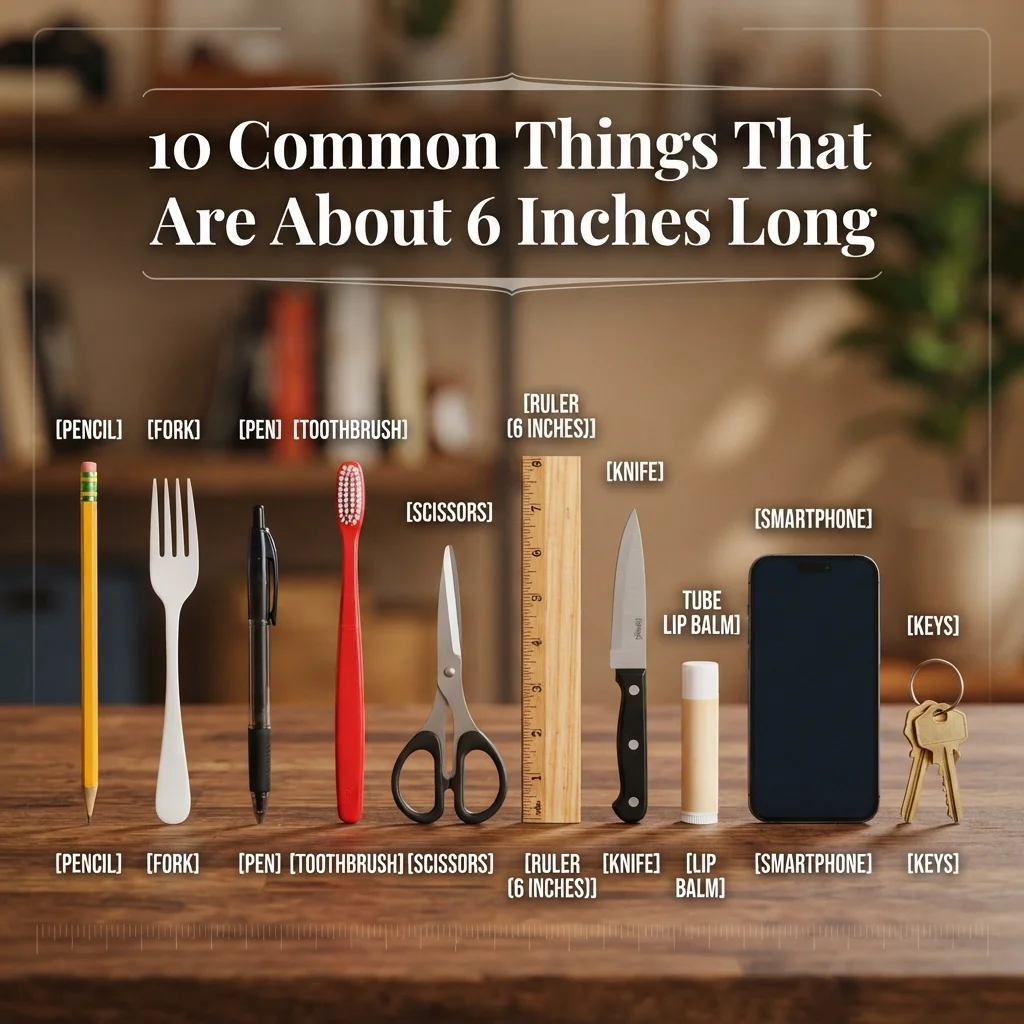
The following everyday examples can help you understand how long six inches looks in real life. Actual measurements vary by product, model, and individual object.
1. A United States Dollar Bill
A United States dollar bill measures approximately 6.14 inches long and 2.61 inches wide. Its length is just 0.14 inches greater than six inches, making it one of the most useful comparisons for this measurement.
Because dollar bills have standardized dimensions, they provide a more consistent reference than many household objects. If you need a quick estimate while shopping or working on a small project, a dollar bill can help you visualize a length close to six inches.
However, avoid treating the bill as an exact six-inch measuring tool. For precise work, use a ruler or tape measure.
2. A Compact Smartphone
Some compact smartphones have body lengths close to six inches, although many modern models are longer. The exact measurement depends on the phone’s design, screen size, and manufacturer.
To use your phone as a reference, check its published height or measure the device from its top edge to its bottom edge. If it measures around 15 centimeters, it is close to six inches long.
Keep in mind that a phone’s screen size is measured diagonally, not along the length of its body. A phone advertised with a six-inch screen does not necessarily have a six-inch-long body.
3. A Shortened Pencil
A new full-size wooden pencil is usually longer than six inches. However, a pencil that has been sharpened and used repeatedly may eventually measure around this length.
Pencils are easy to find in classrooms, offices, and homes, so a shortened pencil can be a convenient visual reference. Place it next to the object you want to estimate and compare their lengths.
Because pencils vary in size and become shorter with use, measure your pencil first if you need a dependable comparison.
4. A Small Toothbrush
Some compact toothbrushes measure close to six inches from the end of the handle to the tip of the bristles. Standard adult toothbrushes can be longer, while travel and children’s models may be shorter.
A toothbrush provides a familiar example because its long, narrow shape makes its overall length easy to see. You can compare it with a small container, storage compartment, or accessory to estimate the size of that item.
For a more accurate comparison, measure the toothbrush rather than assuming every toothbrush is six inches long.
5. A Small Butter Knife
Certain butter knives have an overall length of approximately six inches. Other models are longer, depending on the handle design and blade size.
This kitchen utensil is a helpful reference because it has a relatively straight shape and can be placed flat on a countertop. Comparing it with another object gives you a rough idea of whether that object is close to six inches long.
If you are checking whether a utensil will fit inside a kitchen drawer, remember to leave extra room for the drawer’s shape and the item’s placement.
6. A Compact TV Remote Control
Small television remote controls can measure around six inches long. Larger remotes, especially those with additional buttons or a wider body, may extend beyond this length.
A compact remote is useful for visual comparisons because its narrow, rectangular shape makes the distance from one end to the other easy to judge.
If you have a small remote at home, measure its length and use it as a reference for estimating similarly sized household objects. Do not assume that every remote control has the same dimensions.
7. A Small Banana
A small banana may measure approximately six inches along its curved length, although its size depends on the variety and stage of growth.
Bananas offer a familiar comparison for understanding everyday measurements. You can place one beside an object to make a rough visual estimate, but remember that its curved shape makes measurement less straightforward than measuring a straight object.
For consistency, measure from one end to the other along the banana’s natural curve if you want to compare its overall length.
8. A Compact Screwdriver
Some compact screwdrivers have handles close to six inches long, while other models have longer or shorter handles. The handle length is different from the total length of the screwdriver, which also includes its shaft and tip.
This distinction matters when comparing tools. A screwdriver with a six-inch handle may be considerably longer overall.
If you are using a screwdriver to estimate a measurement, identify whether you are comparing the handle alone or the complete tool. This will help you avoid confusing two different dimensions.
9. A Small Notebook
Some pocket notebooks have a height or width close to six inches. Their dimensions depend on the format, binding, and manufacturer, so not every small notebook will match this measurement.
A notebook is particularly useful when estimating the size of stationery items, small storage spaces, or accessories. Its flat surfaces make it easier to compare one dimension at a time.
For example, a notebook might be approximately six inches tall but much narrower than six inches. Always check the specific side you are comparing.
10. A Small Kitchen Spatula
Certain compact kitchen spatulas measure close to six inches in total length, especially miniature versions designed for small containers or baking tasks. Full-size cooking spatulas are often longer.
A small spatula provides another practical example of a familiar object that may fit this measurement. Its shape can vary considerably, so use it as a rough visual guide rather than an exact standard.
If you are buying a utensil for a particular drawer or container, check the manufacturer’s stated dimensions before making your decision.
Comparison Table: Things That Are About 6 Inches Long
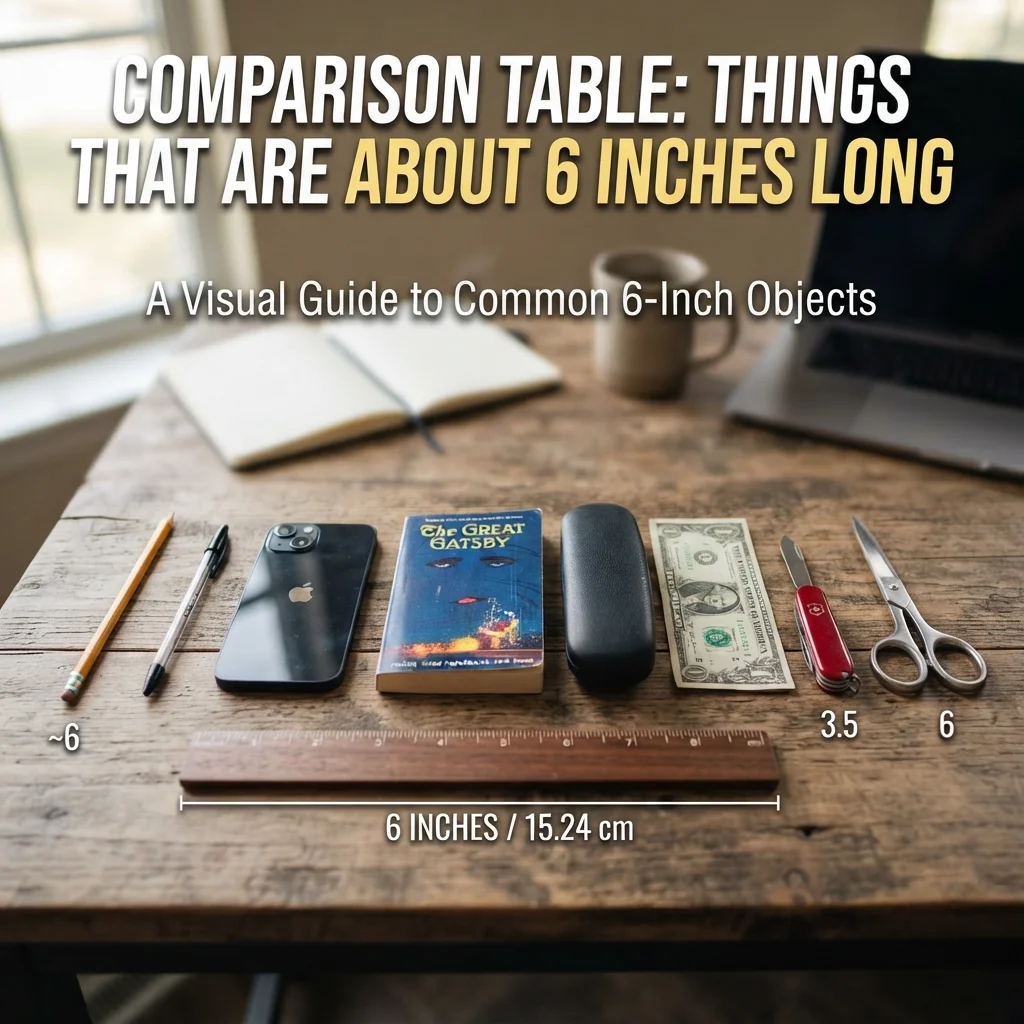
Use this table to review the examples and understand how closely each one may match six inches.
| Everyday Object | Approximate Comparison | Important Detail |
|---|---|---|
| US dollar bill | 6.14 inches long | Standardized size |
| Compact smartphone | Around 6 inches long | Model-dependent |
| Shortened pencil | Around 6 inches long | Depends on use |
| Small toothbrush | Around 6 inches long | Varies by design |
| Butter knife | Around 6 inches long | Check total length |
| Compact TV remote | Around 6 inches long | Model-dependent |
| Small banana | Around 6 inches long | Natural size varies |
| Compact screwdriver | Handle may be 6 inches | Handle differs from total length |
| Small notebook | One side may be 6 inches | Check height and width |
| Small kitchen spatula | Around 6 inches long | Miniature models vary |
Measurement tip: Of these examples, a US dollar bill is the most consistent reference because its dimensions are standardized. The other objects should be treated as approximate comparisons.
How to Measure 6 Inches Without a Ruler
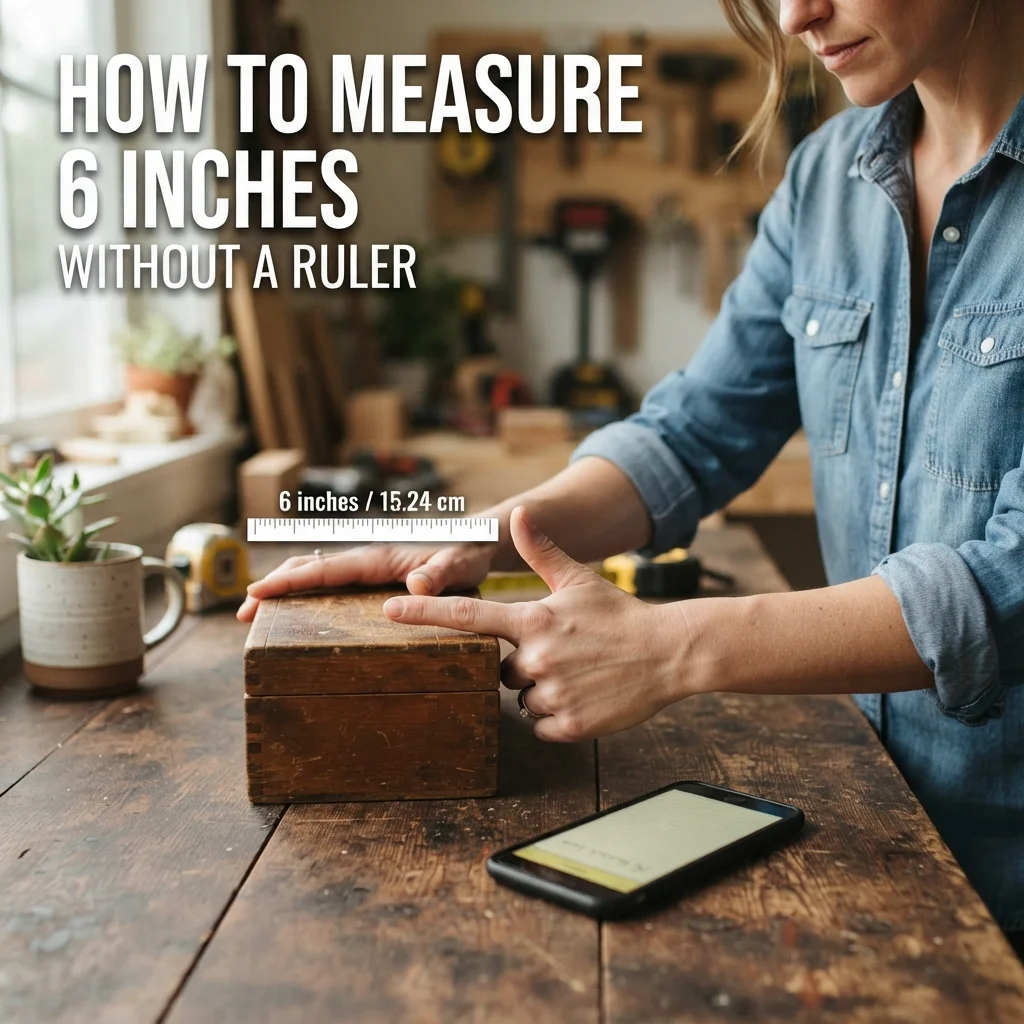
If you need to estimate six inches but do not have a measuring tool nearby, several simple methods can help.
Use a Dollar Bill
A US dollar bill is approximately 6.14 inches long. Place it alongside the object you want to estimate and compare their lengths.
This method works best for rough measurements of small, straight objects. Remember that the bill is slightly longer than six inches.
Use Your Smartphone
A smartphone can be a useful measuring reference if you know its actual body dimensions. Check the manufacturer’s specifications or measure the phone when you have access to a ruler.
Do not rely on screen size alone because screen measurements are taken diagonally.
Use Your Hand as a Rough Guide
Your hand can help you estimate distances, but its dimensions vary significantly from person to person. The width of your palm, the length of your fingers, and the distance from your wrist to a fingertip are different measurements.
If you want to use your hand as a reference, measure it once and remember the result. You can then use that measurement for quick estimates in everyday situations.
Compare the Object With a Known Item
If you have a household object with a known length, place it beside the item you want to measure. Align one end of each object and compare where the other ends fall.
This technique works well for estimating lengths, but it cannot provide a precise result unless the reference object’s dimensions are known.
Use a Measuring App Carefully
Some smartphones offer measurement apps that use the camera and device sensors to estimate distances. These apps can be convenient for quick checks, but accuracy depends on the device, lighting, surface, and measurement method.
For cutting materials, installing hardware, or completing other precision tasks, use a physical ruler or tape measure.
Why Is Knowing the Length of 6 Inches Useful?
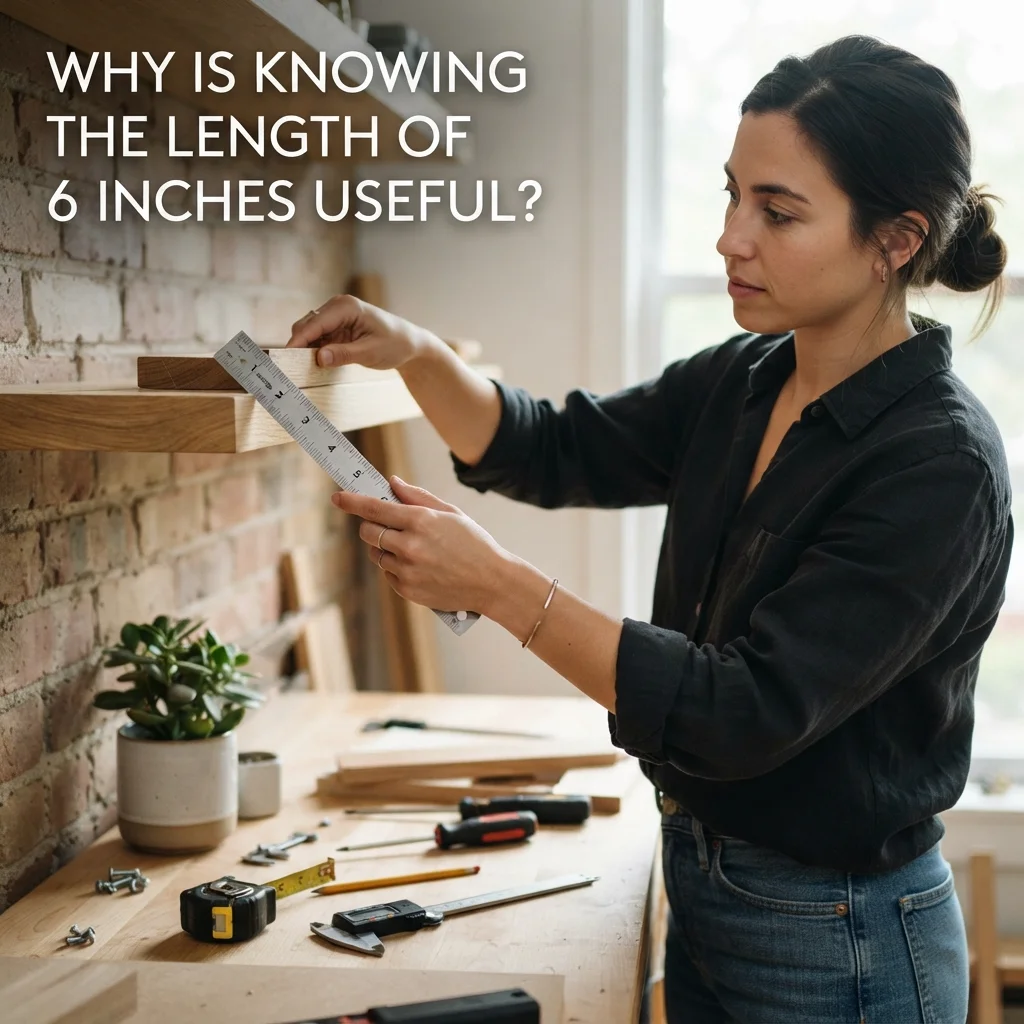
Understanding six inches can help with a variety of ordinary tasks.
- Shopping online: Compare listed product dimensions with objects you already own.
- Home organization: Estimate whether a small item may fit in a drawer or storage compartment.
- School projects: Understand inches and centimeters when working with measurements.
- Crafts and DIY: Estimate the size of small materials before using a ruler for a final measurement.
- Travel: Make rough size comparisons when a measuring tool is not available.
- Product comparisons: Understand whether an item is compact, medium-sized, or larger than expected.
These comparisons are most useful when you only need an approximate idea of an object’s size. For precise fitting, construction, or cutting, always measure the actual item.
Frequently Asked Questions
How many centimeters is 6 inches?
Six inches equals 15.24 centimeters. To convert inches to centimeters, multiply the inch measurement by 2.54.
What is 6 inches in millimeters?
Six inches equals 152.4 millimeters. Since one inch equals 25.4 millimeters, multiplying 6 by 25.4 gives 152.4 mm.
Is 6 inches half a foot?
Yes. One foot contains 12 inches, so six inches is exactly half a foot.
What common object is closest to 6 inches long?
A United States dollar bill is a useful comparison because it measures approximately 6.14 inches long. This makes it slightly longer than six inches.
Is a 6-inch phone actually 6 inches long?
Not necessarily. Smartphone screen sizes are measured diagonally, while the phone’s physical length is measured from one end of its body to the other. A phone with a six-inch screen may have a body that is longer than six inches.
Can I measure 6 inches with my hand?
You can estimate six inches using your hand, but the result will vary depending on your hand size. Measure your hand with a ruler first if you want to use it as a personal reference.
Is 15 cm the same as 6 inches?
Not exactly. Six inches equals 15.24 cm, so 15 cm is 0.24 cm shorter. The difference is small, but it may matter when accurate measurements are required.
How can I measure 6 inches accurately?
Use a ruler or tape measure marked in inches. If you have a metric ruler, measure 15.24 cm instead. Everyday objects are suitable for estimates, but a measuring tool provides a more dependable result.
Conclusion
Six inches equals 15.24 centimeters, 152.4 millimeters, and half a foot. Comparing this length with familiar items can make it easier to understand measurements without memorizing conversions.
A US dollar bill is one of the most reliable everyday references because it measures approximately 6.14 inches. Compact smartphones, shortened pencils, small toothbrushes, and other household objects can also help you visualize this length, provided you account for their varying sizes.
For quick estimates, everyday comparisons are convenient. When accuracy matters, use a ruler or tape measure to confirm the actual dimensions.

Mr. Abdullah is a content writer at Mezvoro who creates helpful, engaging and easy-to-read content for online readers. His work focuses on sharing fresh ideas, useful guides and creative inspiration across a range of topics.