Have you ever needed to measure something small but couldn’t find a ruler or measuring tape? Knowing how big 1 inch is can help you estimate everyday measurements using objects you already have at home.
One inch equals exactly 2.54 centimeters (cm) or 25.4 millimeters (mm). It is a small length, but comparing it with familiar items such as a hockey puck, a coin, a wine cork or your fingertip can make it much easier to picture.
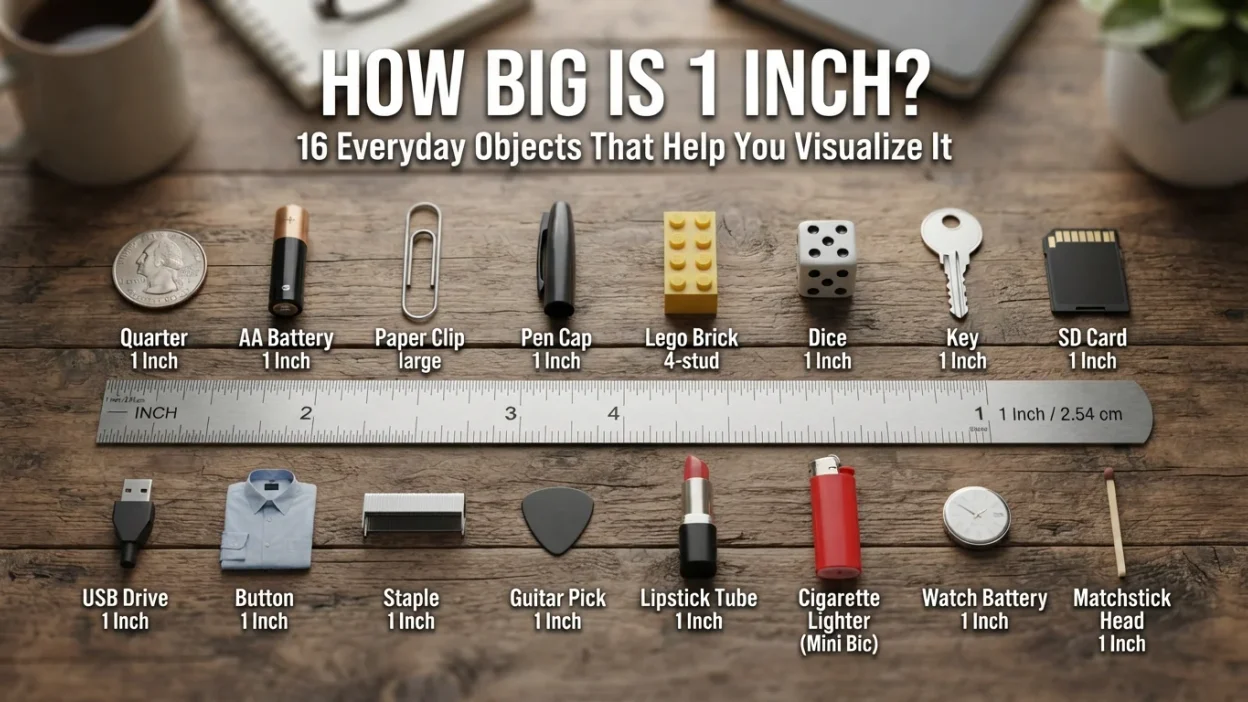
In this guide, you’ll learn how big 1 inch is, explore 16 everyday objects that provide useful size references and discover simple ways to measure an inch without a ruler. You’ll also find conversion charts and answers to common measurement questions.
How Big Is 1 Inch in Different Units?
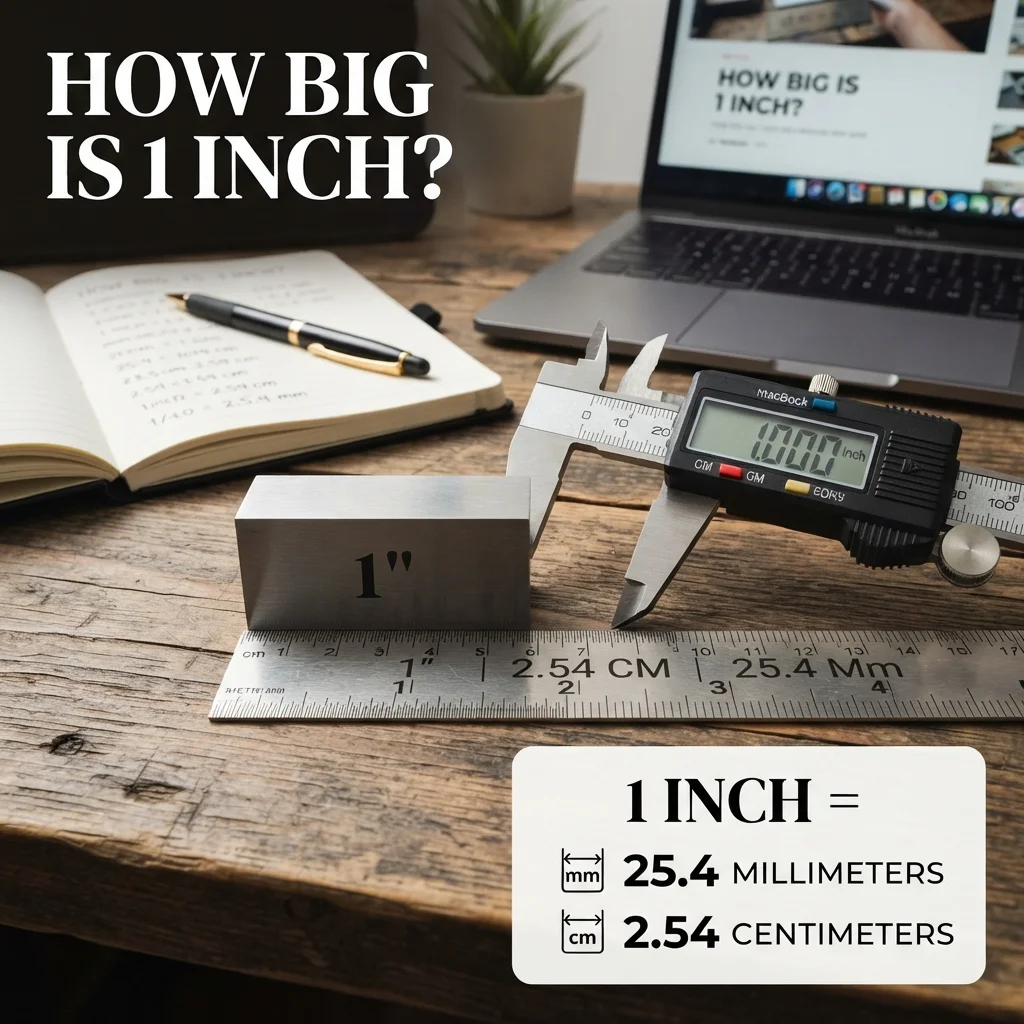
One inch is a standard unit of length used in the United States and several other measurement systems. It is equal to 2.54 centimeters, making it easy to convert between inches and metric units.
Here is a quick reference table for understanding one inch in different units.
| Measurement Unit | Equivalent to 1 Inch |
|---|---|
| Inches | 1 in |
| Centimeters | 2.54 cm |
| Millimeters | 25.4 mm |
| Feet | 0.0833 ft |
| Yards | 0.0278 yd |
| Meters | 0.0254 m |
| Kilometers | 0.0000254 km |
| Miles | 0.0000158 mi |
These conversions are useful when measuring furniture, checking product dimensions, completing DIY projects, or following instructions that use different measurement systems.
For example, if a product is listed as 1 inch wide, you can picture it as a width of 2.54 centimeters. Similarly, 25.4 millimeters gives you the same measurement in a smaller metric unit.
16 Everyday Objects That Help You Picture 1 Inch
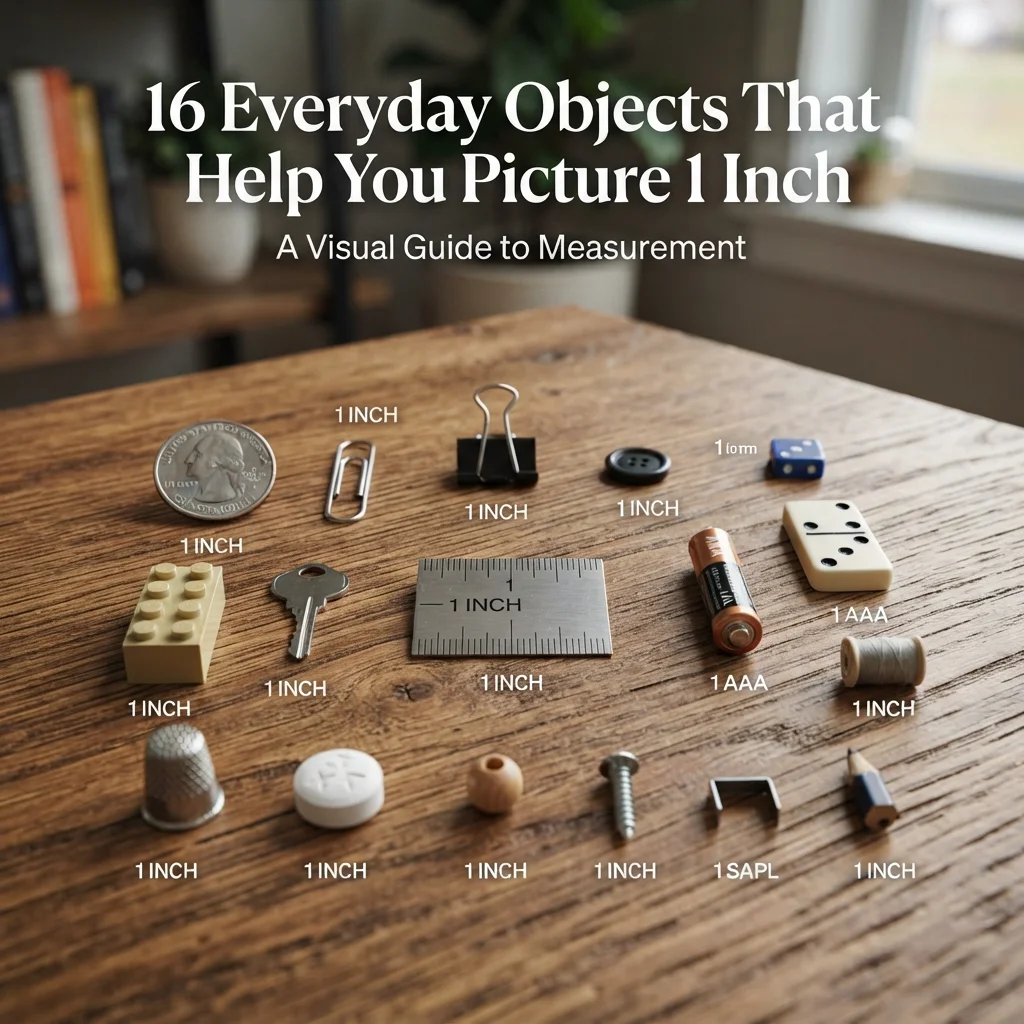
You don’t always need a measuring tool to understand a small length. Several common objects can help you visualize an inch, although some are closer matches than others.
Remember that everyday objects can vary in size. Use these comparisons for estimation rather than precise measuring.
1. Hockey Puck Thickness
A standard hockey puck is one of the most useful examples because its regulation thickness is exactly 1 inch (25.4 mm).
A hockey puck is typically 3 inches in diameter and 1 inch thick. Its flat, cylindrical shape makes the thickness easy to see when you place the puck on its side.
If you have access to a standard hockey puck, its thickness provides a reliable reference for understanding one inch.
2. Stack of Pennies
A stack of U.S. pennies can help you estimate one inch without a ruler. A modern Lincoln penny is approximately 1.52 millimeters thick.
Stacking 16 pennies gives you about 24.32 mm, which is slightly less than one inch. A stack of 17 pennies measures approximately 25.84 mm, slightly more than an inch.
This comparison works best when the coins are stacked flat without gaps.
3. Standard Wine Cork
A typical wine cork can provide a useful visual reference for an inch. Many corks measure approximately 0.94 inch in diameter, although the exact size depends on the type and manufacturer.
Place the cork on a flat surface and look at its circular end. Its width is slightly less than one inch, making it a convenient household comparison.
Corks are not standardized to one exact diameter, so use this example as an estimate rather than an exact measurement.
4. U.S. Dollar Coin
A U.S. dollar coin is slightly wider than one inch. For example, a common golden-colored dollar coin has a diameter of approximately 1.043 inches, or 26.49 millimeters.
This makes it a helpful reference when you want to picture a length close to one inch.
A dollar coin is not exactly one inch across, but the difference is small enough to make it useful for rough comparisons.
5. U.S. Postage Stamp
Some U.S. postage stamps have a dimension close to one inch, depending on the design and format.
For example, a stamp measuring approximately 0.98 inch on one side is just a little shorter than one inch. Looking at the stamp’s longest edge can help you visualize this small measurement.
However, postage stamps come in many shapes and sizes. Check the dimensions of a particular stamp before using it as a measuring reference.
6. Full-Size SD Memory Card
A standard full-size SD memory card is approximately 24 mm wide and 32 mm tall.
Its shorter side measures about 0.94 inch, which is close to one inch. Its longer side is approximately 1.26 inches.
This makes an SD card a useful comparison when you’re working with cameras, computers, or other electronic devices.
Be sure to distinguish between the card’s width and height because they represent different measurements.
7. Large Shooter Marble
A large shooter marble can be close to one inch in diameter. Shooter marbles are generally larger than ordinary playing marbles and are designed to knock smaller marbles out of a playing area.
The size varies by manufacturer and marble type, so not every shooter marble will measure exactly one inch.
If you have one available, compare its widest point with the inch mark on a ruler to see how closely it matches.
8. One-Inch Wood Screw
A wood screw labeled as 1 inch long gives you a direct example of this measurement.
For a typical flat-head wood screw, the stated length is measured from the tip to the top of the head. For other screw-head styles, the measurement convention can differ.
A one-inch screw is commonly used in small woodworking, furniture repairs, and various DIY projects.
Keep in mind that the length refers to the screw’s specified length, not its thickness or diameter.
9. One-Inch Masking Tape
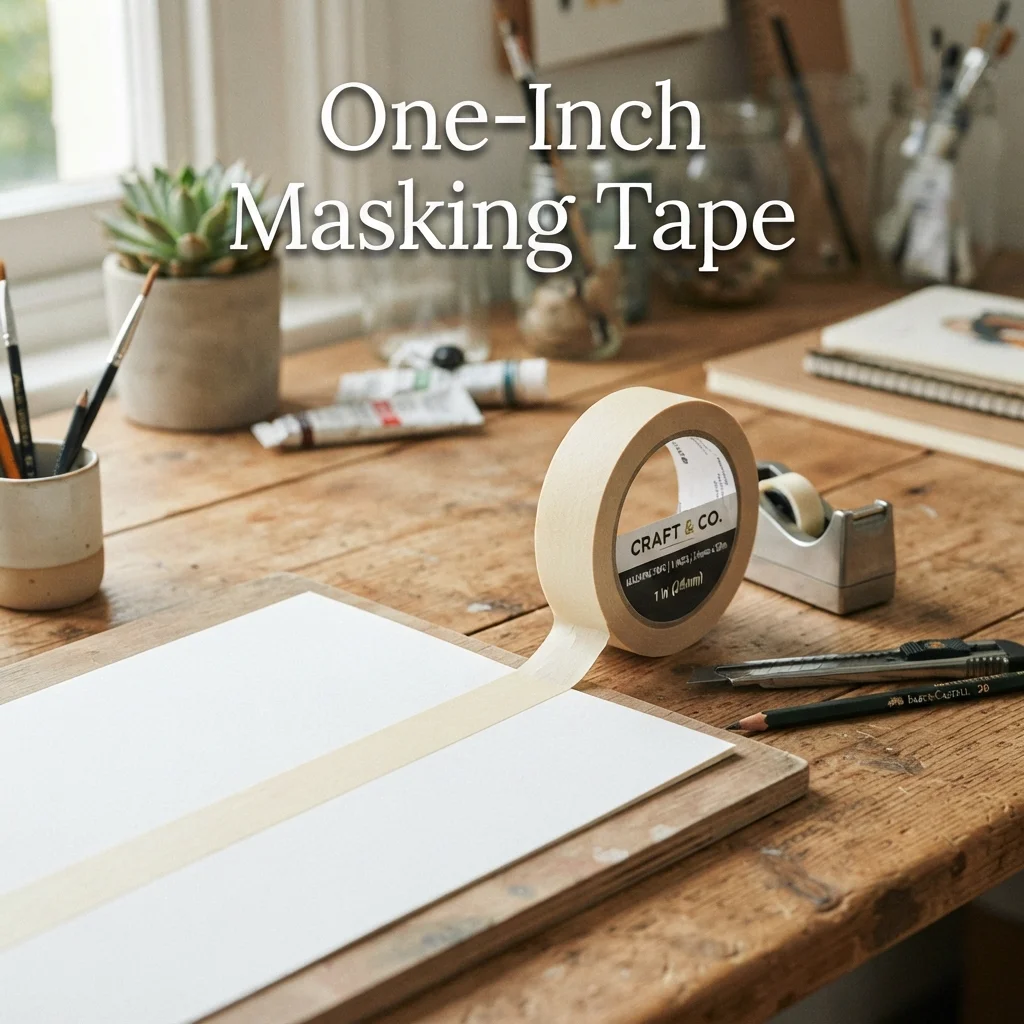
Masking tape is available in different widths, including products labeled as one inch wide.
A tape roll with a true 1-inch width measures 25.4 mm across. This makes it useful for marking areas, creating borders, and completing painting or crafting projects.
Some products have nominal widths that differ slightly from their measured dimensions, so check the packaging if accuracy matters.
You can also pull out a short piece of tape and compare its width with the inch marks on a ruler.
10. Rings on a One-Inch Binder
A binder labeled as a one-inch binder is another familiar example, but there is an important detail: the label refers to the ring size or capacity category, not necessarily the overall dimensions of the binder.
The rings can help you visualize a one-inch measurement, depending on how the manufacturer specifies their size.
Binders also vary in cover dimensions and sheet capacity. Therefore, don’t assume that the outside width of a binder is one inch simply because of its label.
11. One-Inch-Wide Ribbon
Ribbon sold in a one-inch width is a convenient reference for crafts, sewing, and gift wrapping.
A ribbon that measures exactly one inch across is 2.54 cm wide. You can lay it flat and compare its width with the length of an inch on a ruler.
Ribbon is available in satin, grosgrain, cotton, and other materials. Its stated width may vary slightly depending on the product, so check the label if you need a precise measurement.
12. Tip of Your Index Finger
Your index finger can give you a quick visual estimate of one inch.
For some adults, the distance from the fingertip to the first joint is close to one inch. However, finger lengths differ considerably between people.
To create your own reference, measure the distance from your fingertip to the first joint with a ruler. Once you know the actual length, you can use your finger as a convenient estimate when a measuring tool is unavailable.
This method is helpful for quick comparisons, but it should not replace accurate measurement when precision is important.
13. One Inch of Hair Growth
One inch of hair describes a length rather than a particular object.
Human scalp hair grows at an average rate of roughly half an inch per month, although the rate varies from person to person. Based on that estimate, growing one inch of hair may take around two months.
If you want to visualize this length, imagine the distance between two marks separated by 2.54 cm on a ruler.
This comparison can be useful when discussing haircuts, hair growth, or how much length to remove during a trim.
14. A Large Grape
A large grape may measure close to one inch across, depending on its variety and growing conditions.
To picture the size, look at the widest part of a large grape rather than measuring its length from stem to tip.
Some grapes are considerably smaller, while others are larger than an inch. This makes grapes a convenient visual comparison but not a dependable measuring tool.
If you need a precise size for a recipe, craft, or project, use a ruler instead of relying on the fruit’s appearance.
15. A One-Inch Ice Cube
Some ice cube trays are designed to make cubes measuring approximately one inch on each side.
A cube with sides measuring exactly one inch has a length, width, and height of 1 inch each. This gives you a three-dimensional example of the measurement.
However, ice cube trays come in many sizes, and the finished cubes may differ from the advertised dimensions. Ice can also change shape as it melts.
Use this comparison only when you know the tray’s approximate size.
16. A Small Padlock
The body of a compact padlock may measure around one inch wide, making it another possible household reference.
To compare it with an inch, measure straight across the front of the lock’s body. Do not include the curved metal shackle unless you specifically want to measure the entire lock.
Padlocks are manufactured in a wide range of sizes, so some will be narrower than an inch and others considerably wider.
A small padlock is best treated as a rough visual guide rather than an exact one-inch object.
Quick Comparison: Which Objects Are Closest to One Inch?
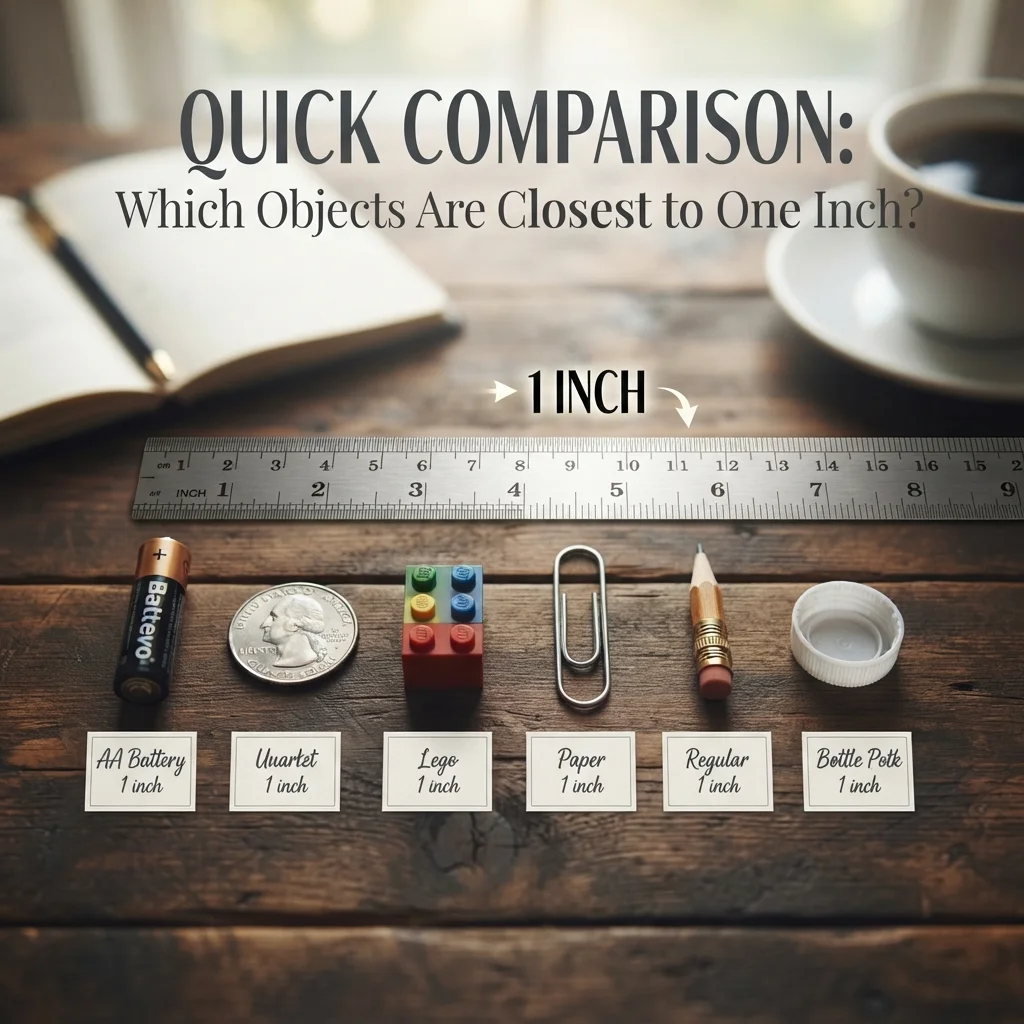
The following table summarizes the examples above and separates standardized measurements from approximate household comparisons.
| Object | Approximate Measurement | Accuracy |
|---|---|---|
| Standard hockey puck thickness | 1 inch | Exact standard |
| Stack of 16 pennies | 0.96 inch | Close estimate |
| Stack of 17 pennies | 1.02 inches | Close estimate |
| Wine cork diameter | Around 0.94 inch | Varies |
| U.S. dollar coin diameter | Around 1.04 inches | Standard size for that coin |
| SD card width | Around 0.94 inch | Standard dimensions |
| One-inch wood screw | 1 inch specified length | Depends on screw type |
| One-inch ribbon | 1 inch nominal width | Check the product |
| Index fingertip to first joint | Around 1 inch for some adults | Varies |
| Large grape diameter | Around 1 inch | Varies |
| Small padlock width | Around 1 inch | Varies |
Best reference for accuracy: A standard hockey puck’s thickness is exactly one inch. For other items, confirm the actual dimensions if you need an accurate measurement.
How to Measure One Inch on a Ruler
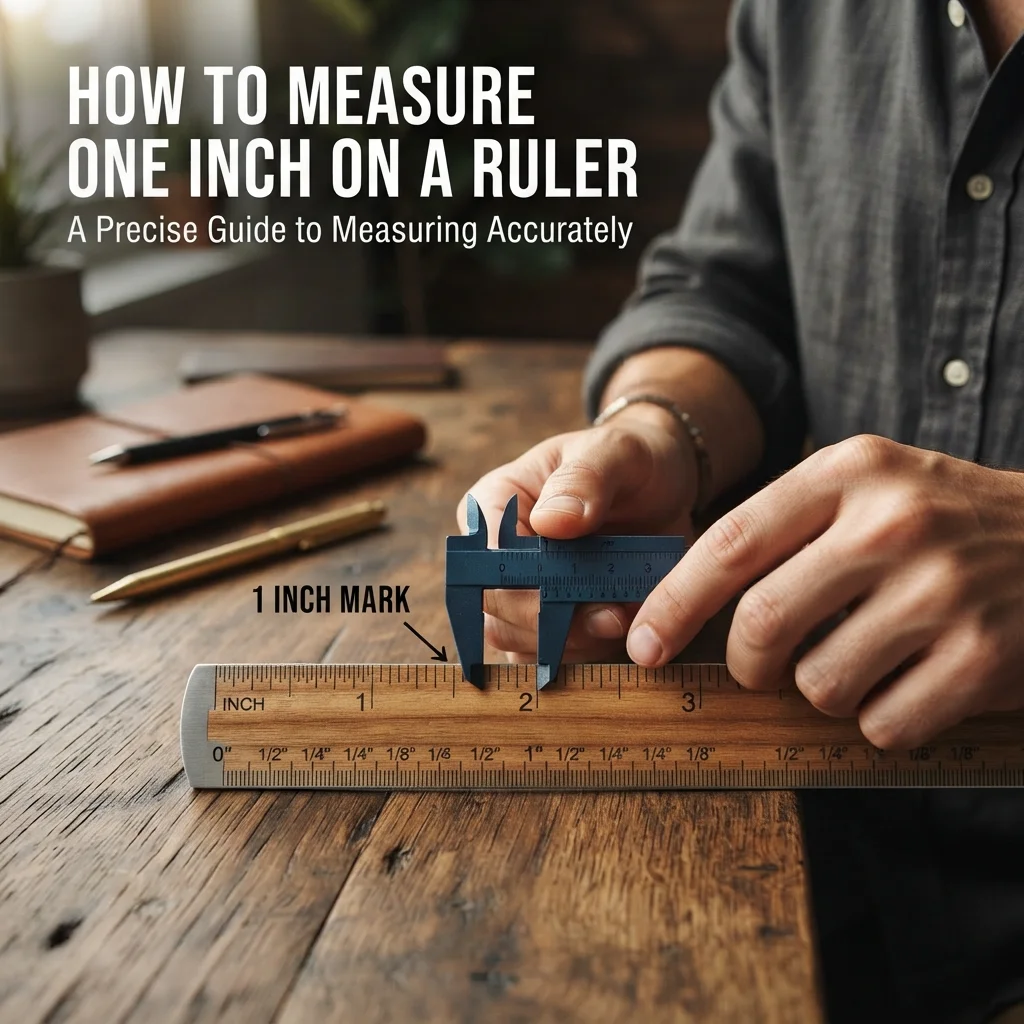
Measuring one inch on a ruler is straightforward once you understand the markings.
Follow these steps:
- Place the object beside a ruler on a flat surface.
- Align one end of the object with the ruler’s zero mark.
- Find the long line labeled 1.
- Check where the other end of the object falls.
The distance from zero to the 1-inch mark is exactly one inch.
Understanding Fractions of an Inch
Many rulers divide an inch into smaller sections. These marks allow you to measure objects that are shorter or longer than a whole-inch increment.
| Fraction | Decimal | Millimeters |
|---|---|---|
| 1/2 inch | 0.5 in | 12.7 mm |
| 1/4 inch | 0.25 in | 6.35 mm |
| 1/8 inch | 0.125 in | 3.175 mm |
| 1/16 inch | 0.0625 in | 1.5875 mm |
On a ruler divided into sixteenths, there are 16 equal intervals within one inch. The longest marks generally identify whole inches, while shorter marks identify fractions.
If your ruler also has metric markings, one inch ends at 25.4 mm, just beyond the 25 mm mark.
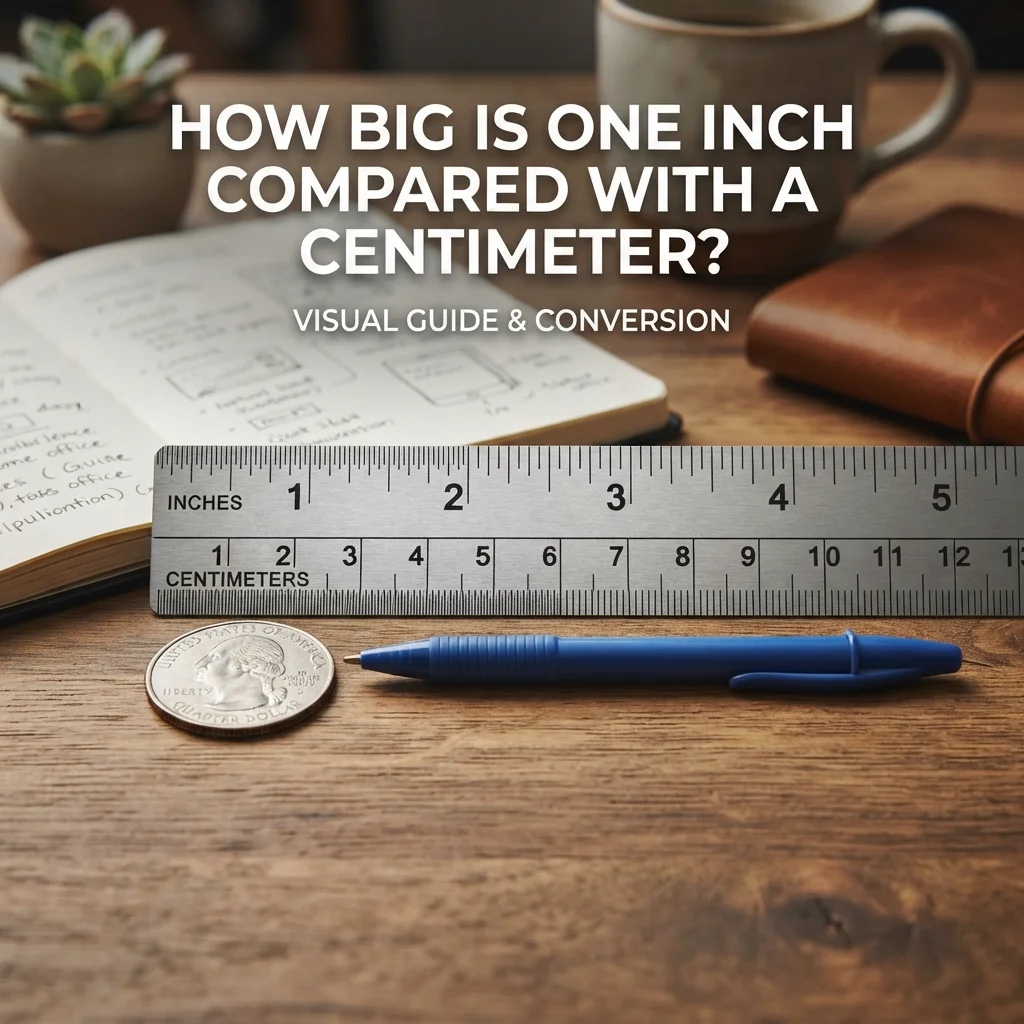
How Big Is One Inch Compared With a Centimeter?

One inch is longer than one centimeter.
A centimeter equals 10 millimeters, while an inch equals 25.4 millimeters. Therefore, one inch is 2.54 times the length of one centimeter.
Here is a simple comparison:
- 1 inch = 2.54 centimeters.
- 1 centimeter = approximately 0.394 inches.
- 1 inch = 25.4 millimeters.
- 10 millimeters = 1 centimeter.
For example, if you are measuring a small object that is 5.08 cm long, its length is exactly 2 inches.
Understanding this relationship is especially useful when buying products online, reading international product specifications, or working on a DIY project that uses both metric and imperial measurements.
How Big Is One Inch on a Phone or Computer Screen?
One inch does not always appear the same size on every phone or computer screen.
For web design, CSS defines one inch as 96 CSS pixels. However, CSS pixels are not necessarily the same as the physical pixels on a display. Screen resolution, pixel density, display scaling, and browser settings can affect the apparent size of an object.
For example, a square set to 96 CSS pixels wide may not measure exactly one physical inch when you hold a ruler against your screen.
For print design, a common resolution is 300 pixels per inch (PPI). At that resolution, a one-inch image dimension corresponds to 300 image pixels.
If you need a true physical inch on a screen, use a calibrated on-screen ruler or compare the display against a physical ruler. Do not rely on pixel counts alone.
What Does One Inch of Rain Mean?

One inch of rain describes the depth of water that would accumulate on a flat, level surface if the water did not run off, drain away, or soak into the ground.
It does not mean that every puddle or street will be exactly one inch deep after a storm. Real-world water levels depend on drainage, soil absorption, slope, and other conditions.
To understand the quantity, one inch of rainfall over one square foot represents approximately 0.623 gallons of water. Over one acre, it represents approximately 27,154 gallons.
That is a substantial amount of water spread across a large area. Even rainfall that sounds modest can cause problems when the ground is saturated or drainage systems cannot handle the runoff.
This example shows why the same measurement can describe both a small everyday length and a significant quantity of water when applied across a surface.
Common Mistakes When Estimating One Inch

Everyday objects can help you picture an inch, but not every comparison is equally reliable. Avoid these common mistakes when estimating small measurements.
Assuming Every Finger Is One Inch Wide
Finger dimensions vary from person to person. Your thumb or index finger might be close to an inch wide, but another person’s finger may be noticeably wider or narrower.
Measure your own finger before using it as a personal reference.
Confusing Width With Length
An object can have different measurements in different directions. An SD card, for example, has a width of approximately 0.94 inch and a longer dimension of approximately 1.26 inches.
Always identify which side you are measuring.
Treating Approximate Sizes as Exact
A grape, wine cork, or small padlock does not have one universal size. These items can help you visualize a measurement, but they cannot guarantee an exact one-inch result.
Forgetting to Start at Zero

When using a ruler, align the object with the zero mark rather than the edge of the ruler. Some rulers have a small gap before the first measurement mark.
Starting at zero helps prevent measurement errors.
Relying on Screen Size Alone
A one-inch graphic on a website may not appear physically one inch wide on every display. Use a physical ruler or calibrated measuring tool whenever exact dimensions matter.
Frequently Asked Questions About One Inch
1. How many centimeters is one inch?
One inch equals exactly 2.54 centimeters. This is a fixed conversion, so you can multiply any inch measurement by 2.54 to convert it into centimeters.
2. How many millimeters are in one inch?
One inch equals exactly 25.4 millimeters. To convert inches into millimeters, multiply the inch value by 25.4.
3. What everyday object is exactly one inch thick?
A standard regulation hockey puck is exactly one inch thick. Its diameter is approximately three inches, so be sure to measure the thickness rather than the width across its circular face.
4. Is a U.S. quarter exactly one inch wide?
No. A U.S. quarter has a diameter of approximately 0.955 inch, or about 24.26 millimeters. It is close to one inch but slightly smaller.
5. Can I measure one inch without a ruler?
You can estimate one inch by comparing it with familiar objects, such as a standard hockey puck’s thickness, a stack of pennies, or a fingertip segment. These methods are useful for rough estimates, but a ruler provides better accuracy.
6. Is one inch longer than one centimeter?
Yes. One inch equals 2.54 centimeters, so it is more than twice as long as one centimeter.
7. How much is one inch in feet?
One inch equals one-twelfth of a foot, or approximately 0.0833 feet. Since 12 inches make one foot, you can divide an inch measurement by 12 to convert it to feet.
8. Does one inch always look the same on a screen?
No. The apparent physical size depends on display characteristics and scaling. Although CSS defines one inch as 96 CSS pixels, that does not guarantee a physical inch on every screen.
Final Thoughts
One inch is a small measurement, equal to 2.54 centimeters or 25.4 millimeters. Once you compare it with familiar objects, it becomes much easier to picture without constantly reaching for a measuring tool.
A standard hockey puck’s thickness provides an exact one-inch reference, while coins, corks, ribbons, grapes, and finger segments offer convenient approximations.
For everyday tasks, these comparisons can help you estimate small lengths quickly. When precision matters, however, use a ruler or measuring tape to confirm the actual measurement.

Mr. Abdullah is a content writer at Mezvoro who creates helpful, engaging and easy-to-read content for online readers. His work focuses on sharing fresh ideas, useful guides and creative inspiration across a range of topics.